
When to Take a Break From Job Searching (And How to Do It Without Guilt)
On this page
TL;DR: Job searching without rest often leads to burnout, weaker applications, and poor interview performance. The right move isn’t always applying to more jobs; it’s knowing when to pause, fix your strategy, recover your energy, and return with a focused plan that gives you a better chance of getting hired.
Job hunting is tiring in a way that is hard to explain to someone who is not doing it. You are being evaluated constantly, often rejected without an explanation, and expected to stay motivated through all of it. At some point, the question is not “how do I search harder” but “when should I stop and rest?”
This blog looks at job search burnout, the signs that tell you it is time for a pause, and how to take a break without losing momentum or falling behind.
Why Rest Matters During a Job Search
There is a common myth that job searching should be a nonstop grind. Apply to more roles, send more messages, attend more networking events. But research on job seeker fatigue and motivation shows that constant rejection without recovery time leads to worse outcomes, not better ones. Tired brains write weaker cover letters. Exhausted candidates perform worse in interviews.
Taking a break is not the opposite of being serious about your career. It is part of doing the search well.
Signs You Need a Break
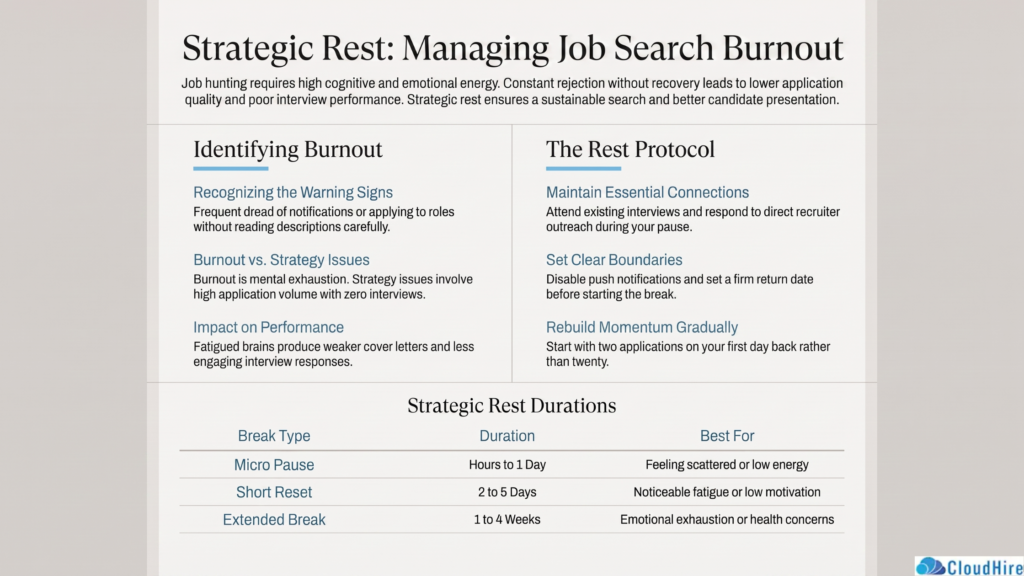
Here are common signals that your job search needs a pause. This is your burnout warning signs checklist.
- You are applying to jobs without reading the description carefully anymore
- Small rejections feel bigger than they used to
- You dread opening your email or job board notifications
- Sleep, appetite, or mood has changed noticeably in the last few weeks
- You catch yourself comparing your timeline to everyone else’s constantly
- Interview prep feels impossible to start, even for roles you want
If two or three of these sound familiar, it is worth stepping back, even briefly. This is a form of self-assessment for job seekers, and it is just as important as updating your resume.
Burnout or a Bad Job Search Strategy?
Not every slow job search means you need a break. Sometimes the problem is the way you’re searching, not your energy.
If you’re applying for dozens of jobs every week but getting no interviews, it may be time to review your resume, the roles you’re targeting, or how you’re applying. Taking a break won’t fix a strategy that isn’t working.
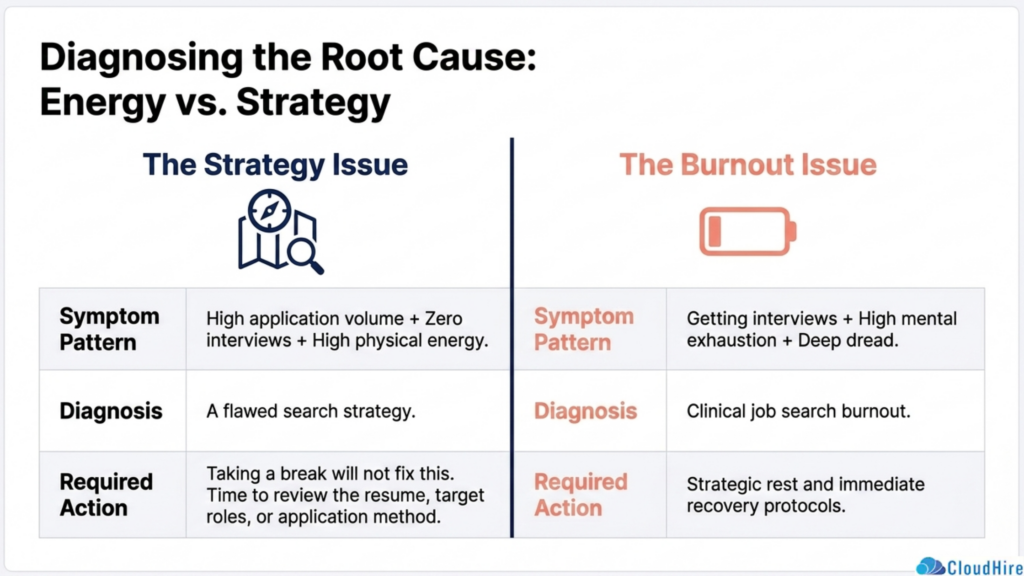
On the other hand, if you’re getting interviews but feel mentally exhausted, struggle to prepare, or can’t bring yourself to open another job board, you’re probably dealing with burnout. Knowing the difference helps you solve the right problem instead of guessing.
Types of Breaks and When Each One Fits
Not every pause needs to be the same length. Here is a simple table to help you decide what kind of career break fits your situation.
| Type of break | Length | Best for |
| Micro pause | A few hours to one day | Feeling scattered, low energy, minor frustration |
| Short reset | Two to five days | Noticeable fatigue, low motivation, mild burnout |
| Extended break | One to four weeks | Significant burnout, emotional exhaustion, health concerns |
| Strategic pause | Ongoing, with review points | Searching for months with no traction, need to rethink strategy |
A micro pause might be turning off job alerts for an afternoon. A strategic pause is different. It means you actively stop applying for a set period to rework your resume, your target roles, or your overall approach, then come back with a clearer plan.
How to Take a Break Without Falling Behind
The fear behind most job search breaks is simple: “What if I miss something?” Here is how to manage that worry practically.
- Set a return date before you start the break, even a rough one
- Turn off push notifications, not your accounts, so nothing is lost
- Tell one or two trusted contacts you are pausing, in case something urgent comes up
- Use part of the break for something restorative, not more job-related research
- When you return, review what worked and what did not before applying again
This approach protects your mental health during unemployment while keeping your search organized. It also prevents the common trap of a “break” that quietly turns into avoidance for months.
What You Should Still Do During a Break
Taking a break doesn’t mean disappearing completely. The goal is to stop the constant pressure of applying while keeping good opportunities within reach.
During your break, you can still reply to recruiters who contact you, attend interviews you’ve already scheduled, and answer important emails. If a role genuinely excites you, there’s nothing wrong with applying. The break is about reducing stress, not ignoring every opportunity that comes your way.
Rebuilding Momentum After a Break
Coming back after time off can feel harder than the break itself. A few small habits make re-entering the job market smoother:
- Start with one or two applications, not twenty, on your first day back
- Revisit your target list and remove roles that no longer fit
- Reconnect with your network with a short, honest update, not an apology
- Set a realistic weekly goal instead of an all-day search routine
Momentum comes back faster than most people expect, especially once the first application or two is out the door again.
Mistakes That Make Job Search Burnout Worse
Many people burn out because they think searching harder will produce better results. In reality, some habits only make the process more frustrating.
Common mistakes include applying to every job without reading the description, checking LinkedIn and job boards every hour, comparing yourself to other job seekers, spending entire days applying without taking breaks, and treating every rejection as a personal failure.
A focused job search usually works better than an endless one.
People Also Ask
Is it okay to take a break from job hunting?
Yes, a planned pause, even a short one, often improves the quality of your applications and interview performance afterward. The key is having a return plan so the break stays intentional.
How long should a job search break be?
It depends on your level of fatigue. A few days is enough for mild burnout. Weeks may be needed for deeper exhaustion. Use the table above as a rough guide, and adjust based on how you feel, not a fixed rule.
Will taking a break hurt my chances of getting hired?
Generally no, especially for shorter breaks. Employers care more about your skills and how you present yourself than a short gap in application activity. Longer employment gaps can be explained honestly in interviews if asked.
How do I know if I am job search burnout or just being lazy?
Burnout usually comes with emotional signs such as dread, irritability, or exhaustion, not just low motivation. If you genuinely care about finding a role but cannot bring yourself to start, that is closer to burnout than laziness.
Coming Back Strong After Your Break
A break only helps if you return with a better plan.
Before you start applying again, review what happened before the break. Did your resume lead to interviews? Were you applying for the right roles? Were you sending thoughtful applications or rushing through them?
Start small by applying for a few well-matched roles instead of dozens in one day. Set realistic weekly goals, rebuild your routine, and focus on quality over quantity. Most people regain momentum faster than they expect once they stop trying to do everything at once.
The Bigger Picture
A job search is a marathon dressed up as a sprint. Treating every week the same, without rest, usually backfires through slower progress, weaker applications, and burnout that lasts longer than the break would have. Building in recovery time for job seekers is not a luxury. It is part of a sustainable job search strategy that gets you to an offer in better shape, mentally and professionally.
How CloudHire Helps
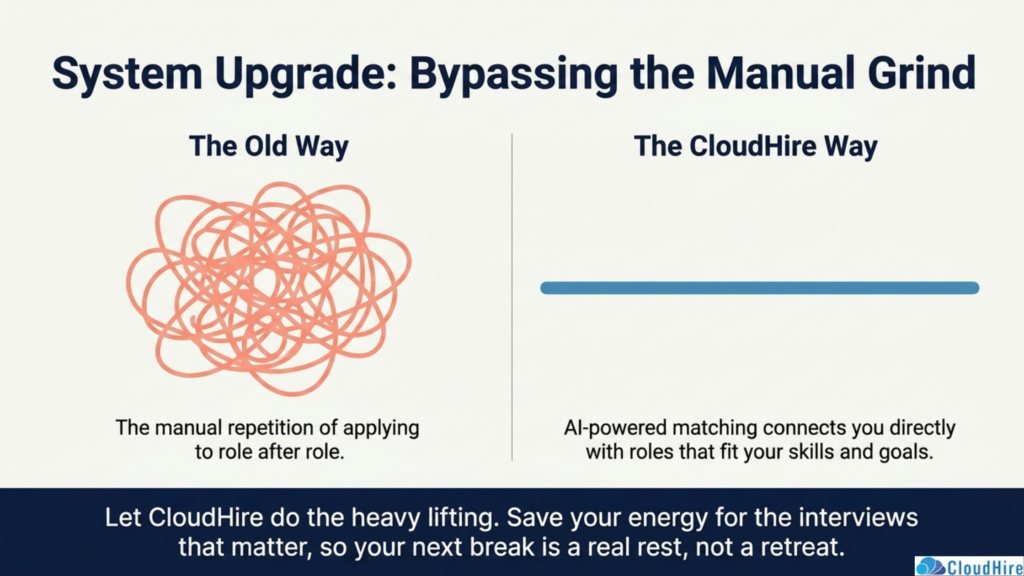
Part of what makes job searching exhausting is the manual repetition of applying to role after role. CloudHire’s AI-powered matching reduces that load by connecting you with roles that actually fit your skills and goals, so your energy goes toward interviews that matter, not endless scrolling.
Ready to search smarter and not harder? Let CloudHire help you find roles that fit, so your next break is a real rest, not a retreat.
Put your job search on autopilot
CloudHire Smart Apply tailors your resume and applies to matching roles for you — so you spend your time interviewing, not scrolling.