
How to Find Jobs That Aren’t Posted on LinkedIn (The Hidden Job Market)
On this page
TL;DR: Most jobs are never posted anywhere online. Up to 70–85% of roles get filled through talent Platforms, referrals, direct outreach, and internal networks before a job board ever sees them. If LinkedIn is your only job search strategy, you are competing in the smallest, most crowded pool. This blog shows you the channels that actually work.
The Problem With Only Using LinkedIn
LinkedIn is a great professional tool. But it’s also where every other candidate is looking. When a company posts a role publicly, they receive anywhere from 200 to 500 applications, and your resume has a statistically low chance of making it through automated filters, let alone reaching a human.
Here’s what most people don’t know: up to 70–80% of jobs are never posted on job boards. These are real roles, often the better ones, that get filled through referrals, recruiter conversations, and direct outreach. This is what career professionals call the hidden job market, and it’s where most hiring actually happens.
Understanding how to find unadvertised jobs isn’t a secret skill. It’s just a different set of habits.
Why Companies Don’t Post Every Job
Before getting into the tactics, it helps to understand the “why.”
| Reason | What It Means for You |
|---|---|
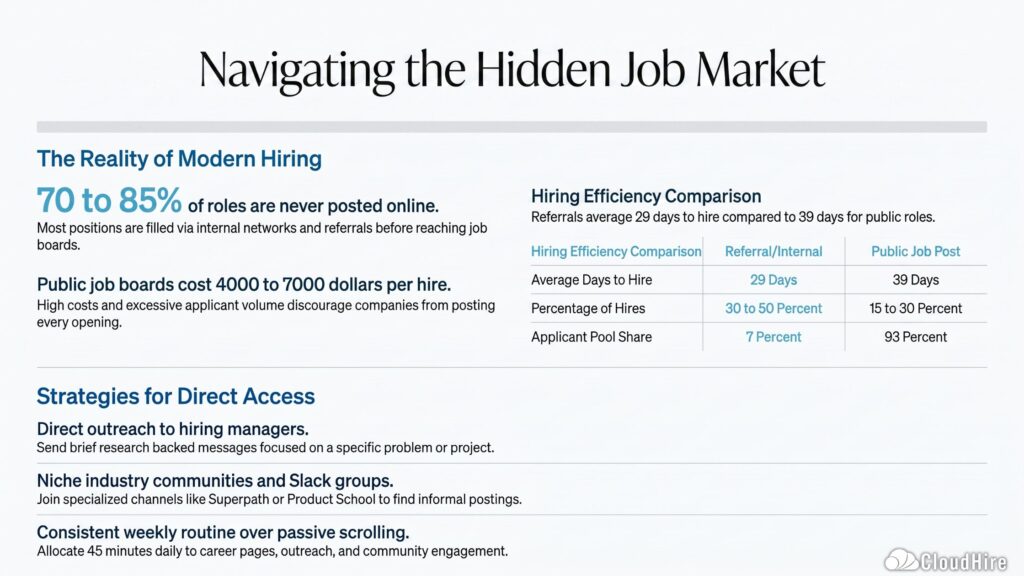
| Cost of job boards | Posting publicly costs $4,000–$7,000 per hire. Referrals cost a fraction of that. |
| Speed | Referral hires take 29 days on average vs. 39 days for a publicly posted role. |
| Confidentiality | Replacing a senior leader or building a new team quietly keeps competitors from finding out. |
| Volume control | Public posts flood inboxes. Referrals and direct contacts give HR a manageable, pre-vetted pool. |
| Trust factor | Employee referrals account for 30–50% of all hires despite making up only 7% of the applicant pool. Companies trust people their employees vouch for. |
Where Jobs Actually Get Filled
1. Employee Referrals
This is the single largest source of hires outside of public postings. Someone at the company knows someone who fits the role, and a conversation leads to an offer, often before a job description is even written.
How to tap it:
- Tell people in your network that you’re actively looking and what kind of role you want. Be specific. “I’m looking for a B2B marketing manager role in a SaaS company” is far more useful than “open to opportunities.”
- Reconnect with former colleagues, classmates, and managers. A short message asking how they’re doing, followed by context about what you’re looking for, is enough.
- Look up target companies on LinkedIn and see if you have 1st or 2nd-degree connections there. A warm introduction beats a cold application every time.
2. Talent Platforms Built for Discovery
Many recruiters don’t start with job boards. Recruiters are becoming more selective as fake candidates, AI-generated resumes, and low-quality applications flood traditional job boards. Verified profiles, identity checks, and short video introductions make it easier to prove you’re a genuine candidate, helping you stand out before the interview even begins.
3. Direct Outreach to Hiring Managers
This feels uncomfortable because most people never do it. That’s exactly why it works.
The right approach here is not blasting generic messages to HR inboxes. It’s identifying the person who would actually be your manager, researching them and their team, and sending a short, specific message that shows you understand their work.
A message that works:
- One line on who you are and your relevant background
- One line on why you’re reaching out to this company specifically (a product you use, a problem they’re solving, something they published)
- A clear ask: a 15-minute conversation, not a job
Long-tail keyword note: This is how to approach direct job applications to companies without a posted opening, and it’s especially effective in industries like tech, SaaS, and marketing.
4. Company Career Pages (Before LinkedIn Sees Them)
Many companies post roles on their own careers page first, and those postings take days or weeks to surface on LinkedIn or Indeed. Checking career pages directly, especially for your top target companies, can give you a head start before the flood of applicants arrives.
More on this in a dedicated guide below.
5. Industry Communities and Slack Groups
For roles in tech, design, marketing, content, and finance, a lot of hiring happens in niche communities before it goes public.
Some worth knowing:
- Slack workspaces like Superpath (content marketing), Product School, or local startup communities often have job channels where companies post roles informally
- Reddit communities like r/cscareerquestions or industry-specific subreddits
- Discord servers for specific tools and frameworks
- Alumni networks from your university or a bootcamp you attended
These channels are low-competition and high-trust because the people there are already self-selecting for a specific field.
6. Recruiters and Staffing Agencies
Recruiters often know about openings before they’re posted, or even before they’re formally created. Building a relationship with two or three recruitment professionals in your industry is one of the most underrated job search moves. They get paid when they place you, so they’re motivated to match you well.
A Simple Weekly Routine for the Hidden Job Market
You don’t need to spend 8 hours a day on this. A focused 30–45 minutes done consistently will outperform hours of passive scrolling.
| Day | Action |
|---|---|
| Monday | Check career pages of 5 target companies directly |
| Tuesday | Send 2–3 personalized messages to hiring managers or connections |
| Wednesday | Engage meaningfully in one industry community (comment, contribute, share) |
| Thursday | Reach out to one recruiter or staffing agency in your field |
| Friday | Follow up on any open conversations from the week |
What to Do When There Are No Open Roles
Sometimes you reach out to a company you genuinely want to work at and there’s nothing listed. That’s not a dead end.
A well-written speculative message, sometimes called a cold outreach for jobs, that explains what you can contribute and why this specific company matters to you can go further than most people expect. Companies create roles for the right people all the time. Many jobs are created around specific people, not posted positions. A manager meets someone impressive at a conference, a former colleague reaches out, and suddenly a “role” exists that was never planned.
Frequently Asked Questions
What percentage of jobs are never posted online?
Research consistently shows that 70–85% of jobs are filled without ever being publicly advertised, according to LinkedIn workforce data and multiple recruiting industry surveys.
Is it worth applying on LinkedIn at all?
Yes, but it shouldn’t be your only channel. LinkedIn works best as a visibility tool: keep your profile updated, engage with your industry, and let recruiters find you while you do your own outreach in parallel.
What is the hidden job market?
The hidden job market refers to all job opportunities that get filled through internal promotions, employee referrals, recruiter relationships, or direct outreach, without ever being posted on a public job board.
How do I reach a hiring manager without knowing anyone at the company?
Find them on LinkedIn using a job title + company search. Send a short, research-backed message (not a copy-paste template) that shows you know something specific about their team or product. Keep it under 150 words.
Build a Profile That Gets Found Without Applying
One more thing: While you’re doing all of this outreach, make sure your candidate profile is working for you passively. Recruiters search for candidates every day. If your profile is thin, keyword-sparse, or incomplete, you are invisible to the people who fill roles before they post them.
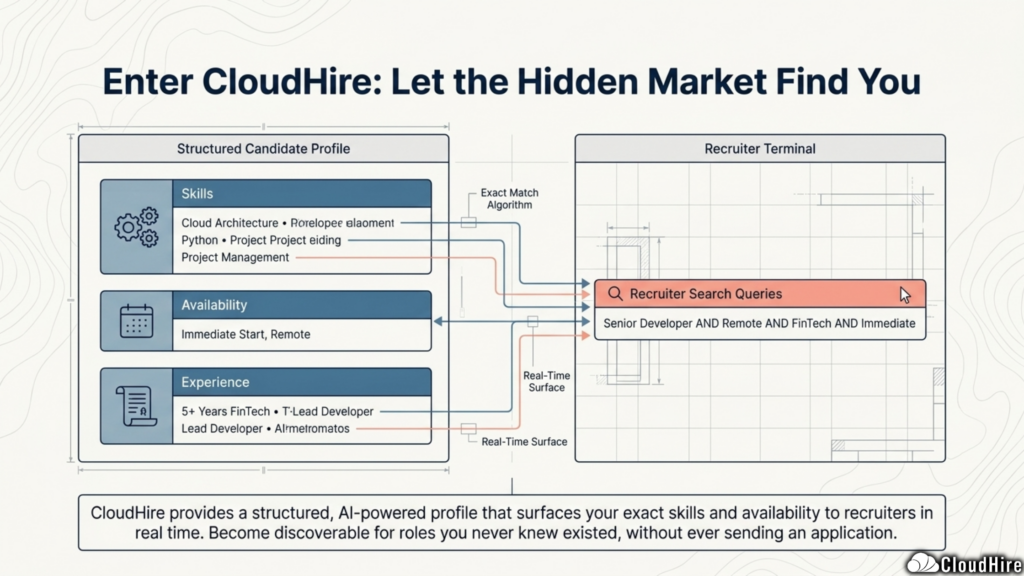
CloudHire makes this easier by giving candidates a structured, AI-powered profile that surfaces your skills, experience, and availability to recruiters in real time, so you can be discovered for roles you never knew existed. You don’t have to wait for a job post to start the conversation.
Create your CloudHire profile and get found by recruiters →
Put your job search on autopilot
CloudHire Smart Apply tailors your resume and applies to matching roles for you — so you spend your time interviewing, not scrolling.