
Understanding Job Posting Language and Red Flags (What the Words Really Mean)
On this page
TL;DR: Most job descriptions contain clues about the role, workload, pay, and company culture. Learn how to decode common hiring phrases, identify warning signs, research employers, and avoid wasting time on jobs that aren’t the right fit.
Job postings are written to attract people. That is normal. But sometimes the wording hides things you should know before you apply, or before you accept an offer. Learning to read between the lines of a job description can save you from wasted interviews, awkward salary talks, and jobs that do not match what was promised.
This guide breaks down common job posting red flags, explains the phrases that should make you pause, and gives you a simple way to check any listing before you hit apply.
Why Job Posting Language Matters
A job listing is often the first real interaction you have with a company. It tells you how they communicate, what they value, and sometimes, what they are trying to avoid saying directly. Recruiters call this job description analysis, and it is a skill worth building if you are job hunting seriously.
Here is the thing. Most companies are not trying to trick you. But some phrases have become so common that they carry a hidden meaning in the job market. Knowing them helps you make better decisions with your time.
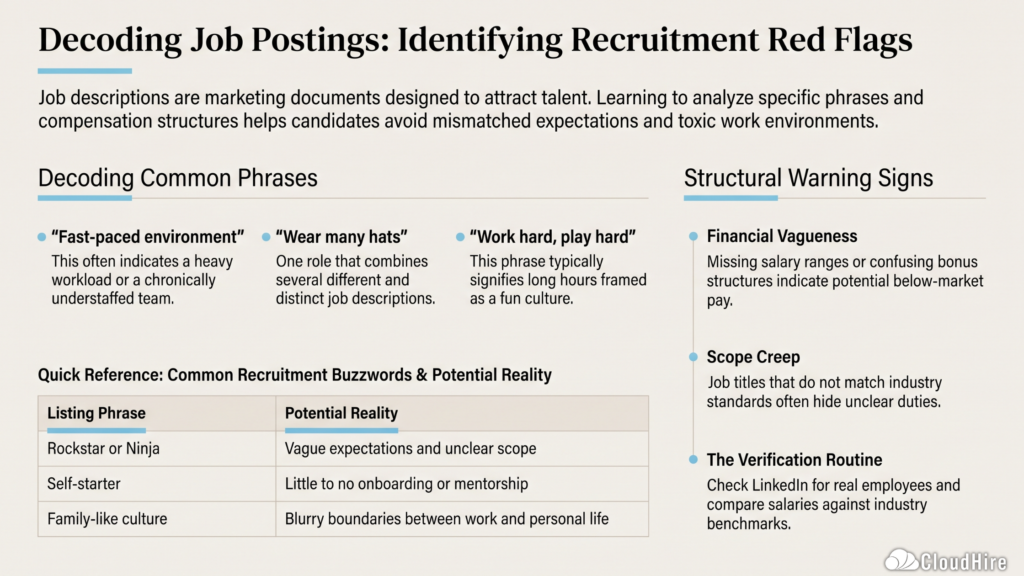
Common Red Flag Phrases and What They Might Mean
Below is a quick reference table. Think of this as your warning signs in job listings cheat sheet.
| Phrase in the listing | What it might actually mean |
| “Fast-paced environment” | Heavy workload, possibly understaffed team |
| “Wear many hats” | One role, several job descriptions combined |
| “Work hard, play hard” | Long hours dressed up as fun culture |
| “Competitive salary” (no range given) | Salary may be below market rate |
| “Rockstar” or “ninja” needed | Vague expectations, unclear scope |
| “Must be a self-starter” | Little to no onboarding or mentorship |
| “Flexible hours” (with no other detail) | Could mean always-on availability |
| “Fun, family-like culture” | Boundaries between work and personal time may be blurry |
None of these phrases are automatic deal breakers. Context matters. A startup honestly needing someone flexible is different from a company using the same words to avoid paying overtime. This is where applicant intent keywords like “should I apply” or “is this job legit” come into play. You are not just reading a post. You are evaluating a working relationship.
Salary and Compensation Red Flags
Money-related vagueness is one of the biggest warning signs. Watch out for:
- No salary range listed anywhere, even after you ask twice
- “Commission only” roles disguised as regular jobs
- Pay described only in vague terms like “great earning potential”
- Bonus structures explained with confusing math that never quite adds up
If a company will not talk numbers early, that is useful information. It does not always mean something is wrong. But it is a commercial intent signal worth investigating before you spend hours preparing for interviews.
Vague Job Titles and Scope Creep
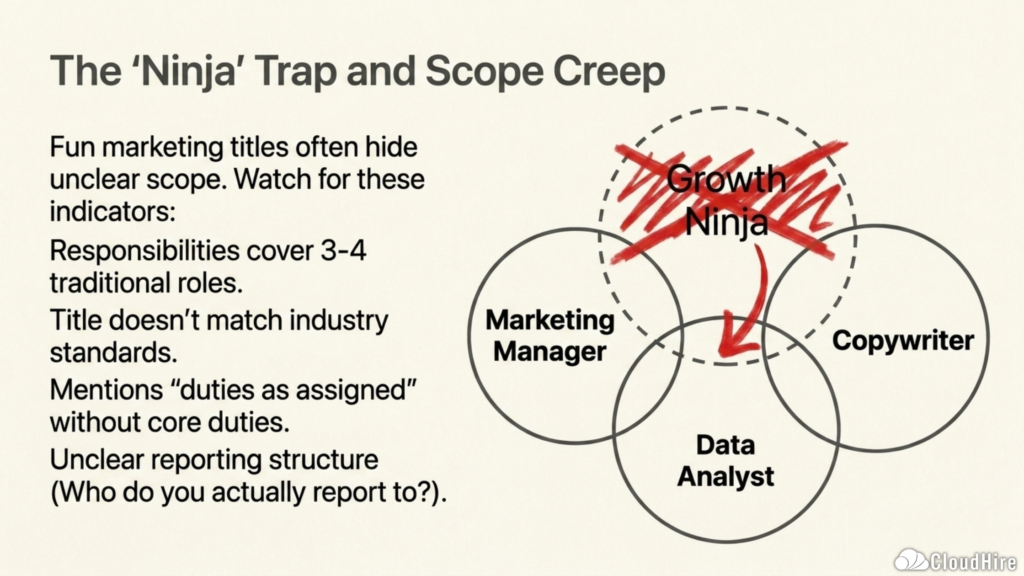
Some listings use job titles that sound impressive but explain very little. A title like “Growth Ninja” or “Digital Wizard” might be fun marketing, but ask yourself: does the actual job description explain what you will do day to day?
Watch for these scope creep indicators:
- The listed responsibilities cover three or four different traditional roles
- The job title does not match typical industry job title standards for that function
- Reporting structure is unclear (who do you actually report to?)
- The listing mentions “duties as assigned” without listing the core duties clearly
How to Verify a Job Posting Before You Apply
Here is a short and practical checklist. This is your pre-application research routine.
- Search the company name along with words like “reviews” or “complaints”
- Check if the same job has been posted repeatedly over several months
- Look up the recruiter or hiring manager on LinkedIn to confirm they are real
- Compare the salary range, if given, against industry salary benchmarks for your role and city
- Read the job description twice: once for content, once for tone
Doing this before applying is part of good job search due diligence. It takes fifteen minutes and it can save you weeks of chasing a role that was never going to be a good fit.
People Also Ask
How do I know if a job posting is fake?
Look for missing company details, no verifiable address, requests for payment or personal financial information early in the process, and salary promises that sound too good for the described work. A real employer will not ask you to pay for training before hiring you.
What does “competitive salary” actually mean in a job post?
It usually means the company has not decided on a firm number, or wants room to negotiate down. If a range is not shared after you ask, it is fair to treat that as a soft red flag in hiring and factor it into your decision.
Should I apply even if a listing has some red flags?
Yes, sometimes. A red flag is a prompt to ask better questions, not always a reason to walk away. Use the interview stage to clarify anything unclear in the posting.
Why do companies use vague job titles?
Sometimes it is genuine startup flexibility. Other times it hides an unclear scope of work. Asking directly in the interview, “What does a typical week look like in this role?” usually clears this up fast.
A Quick Word on Reading Between the Lines
Job postings are marketing documents written by humans, often under time pressure. They are not legal contracts. So while the phrases above are useful signals, the real test happens in the interview. Ask direct questions about hours, pay, team size, and manager expectations. A good employer will answer clearly. A company that dodges simple questions is telling you something important, even if the job listing looked fine on paper.
Understanding employer branding language this way turns job hunting from a guessing game into an informed decision. You are not being paranoid by reading closely. You are being smart with your time and career.
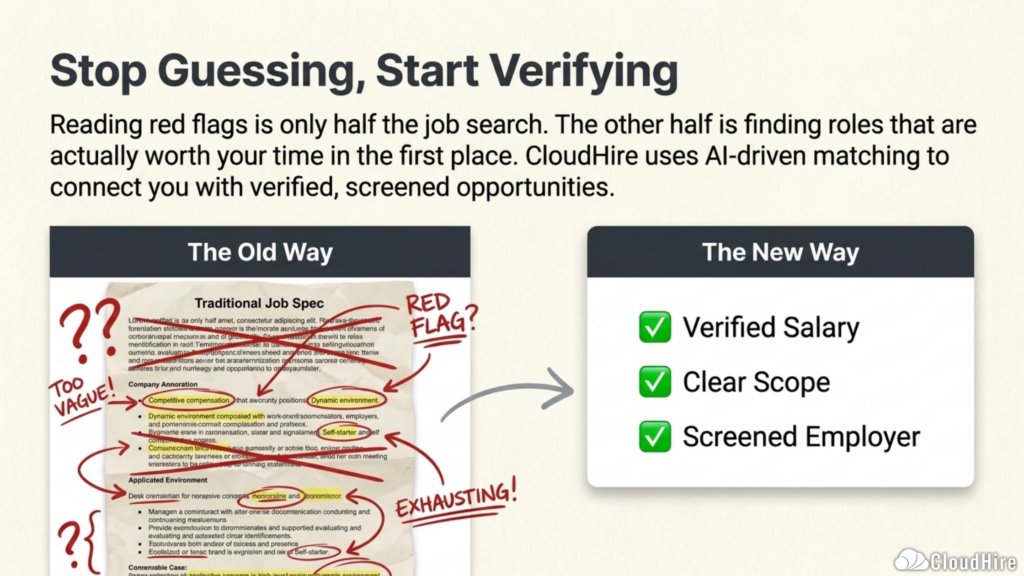
Reading red flags is only half the job search. The other half is finding roles that are actually worth your time in the first place. CloudHire uses AI-driven matching to connect you with verified, screened opportunities, so you spend less time decoding vague listings and more time talking to employers who are upfront about the role, the pay, and what they expect from you.
Ready to apply smarter? Explore verified job opportunities on CloudHire and skip the crowd.
Put your job search on autopilot
CloudHire Smart Apply tailors your resume and applies to matching roles for you — so you spend your time interviewing, not scrolling.