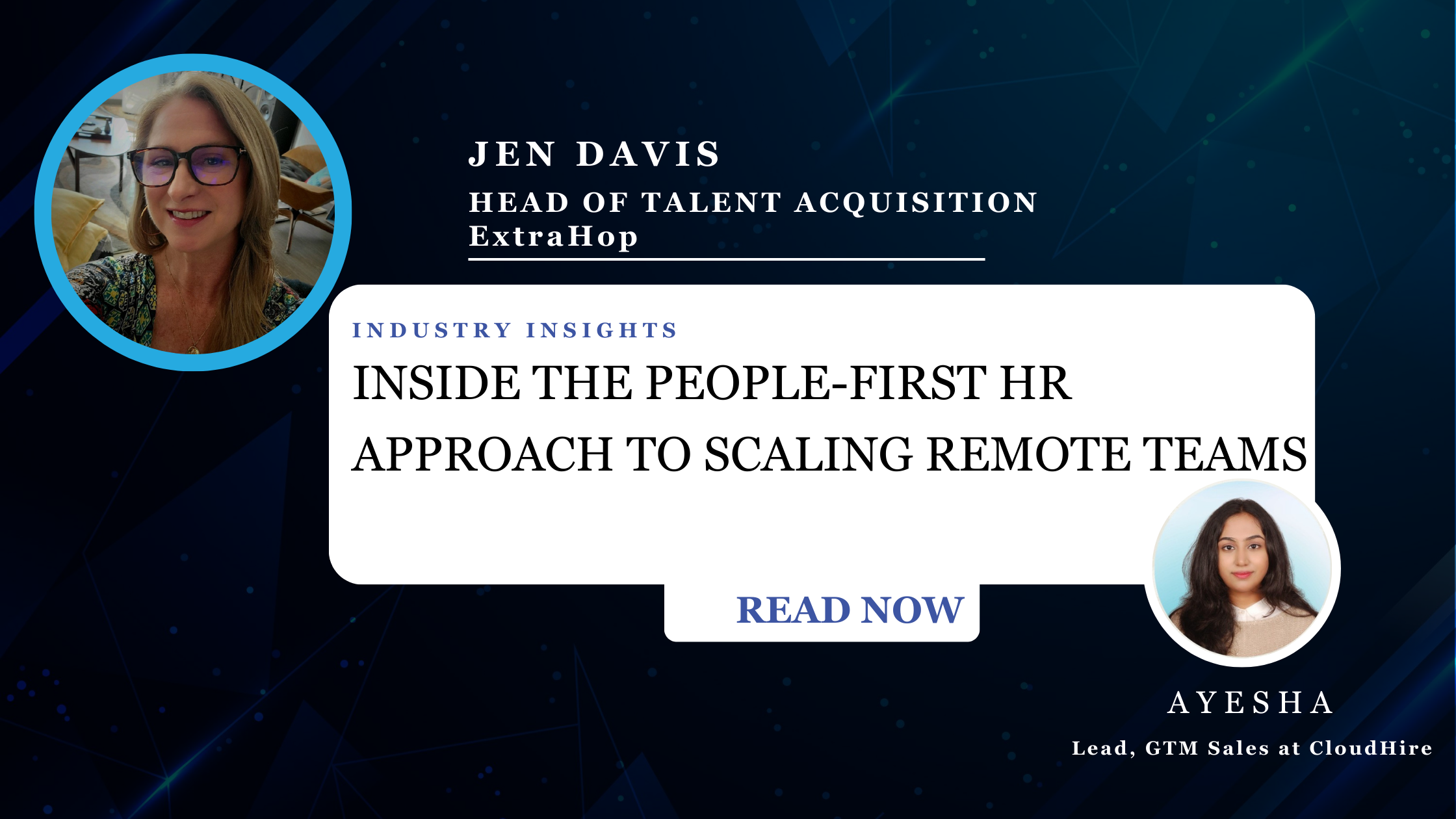
An exclusive Scaling Remote interview with Head of Talent Acquisition at ExtraHop, Jen Davis, on building resilient teams, future-proofing HR infrastructure, and leveraging AI responsibly.
A People-First Mindset in a Tech-Driven World
When organizations talk about scaling remote teams, the conversation often revolves around tools, processes, and automation. But forJen Davis, Principal HR Business Partner at ExtraHop, the foundation of sustainable growth is far simpler and far more human: employee experience.
“My job exists because of our people. And if we don’t treat them like valued customers, we won’t have a business to sustain.”
With a career spanning decades across industries as varied as manufacturing, real estate, technology, and cybersecurity, Jen has seen trends come and go. But her philosophy has remained constant: treat employees like customers, design HR processes with empathy, and never stop evolving.
Why Employee Experience is a Competitive Advantage
For Jen, employee experience is more than an HR initiative; it’s a strategic advantage. Every system, policy, and tool must be designed with the end user in mind. This means:
● Customer-centric thinking: Designing processes that serve employees with the same care we give customers.
● Operational empathy: Balancing efficiency with genuine human connection.
● Feedback loops: Actively gathering employee insights and adapting accordingly.
Companies that strike this balance, Jen points out, enjoy stronger retention, higher productivity and engagement, building a reputation that attracts high-caliber candidates.
Universal Best Practices for HR Across Industries
Having led HR transformations in both legacy enterprises and fast-growing tech firms, Jen identifies practices that consistently deliver results, regardless of industry:
- Continuous Review and Iteration
HR programs should never be “set and forget.” Like product development, they require regular after-action reviews and refinements. - Stakeholder Inclusion from the Start
Engage managers, employees, and even mentors when designing initiatives. This builds early buy-in and ensures relevance. - Adaptability to Change
Workforce expectations shift quickly. HR must stay agile, adapting to new technologies, market conditions, and cultural trends.
“Change is constant. You can’t set it and forget it. The most effective HR programs are alive, evolving with the needs of the people they serve.”
Retaining Talent Through a People-First Culture
In an industry where tech giants lure talent with generous salaries and stock options, Jen’s organizations compete and win on culture.
One measure of success? Talented boomerang employees who left and later returned. In just six months, her team welcomed back more than five former employees.
Their secret:
● Offering stretch opportunities that accelerate professional growth.
● Creating cross-departmental relationships that broaden employee networks.
● Staying in touch with alumni makes it easy for them to return.
Overcoming HR Infrastructure Challenges
Scaling HR operations isn’t just about adding headcount; it’s about capacity, prioritization, and smart investment.
Jen identifies three major challenges:
● Time Constraints: HR teams balancing compliance, payroll, and strategic projects often lack bandwidth for innovation.
● Learning & Development Gaps: Particularly for mid-career employees, a lack of growth opportunities can drive attrition.
● Leadership Buy-In: Convincing executives to view HR as a strategic driver, not just a cost center.
The Role of AI in the Future of Employee Experience
Jen sees AI as a powerful tool with one caveat: it must be implemented responsibly, respecting company culture and compliance obligations.
Potential applications include:
● AI Onboarding Assistants: Centralizing policy, benefits, and training information for new hires.
● Real-Time FAQ Bots: Answering employee questions instantly, without endless navigation through intranets.
● Fraud Prevention Systems: Detecting AI-generated candidates and verifying identities before interviews.
“We wouldn’t make customers click 500 times to find an answer. Why would we do that to employees?”
Actionable Takeaways for HR Leaders
- Think Like a UX Designer
Apply design thinking to HR systems. Make them intuitive, responsive, and employee-friendly. - Create Structured Feedback Loops
Schedule regular reviews of programs, policies, and tools to ensure they’re still serving the workforce. - Invest in Growth, Not Just Retention
Career development programs keep top performers engaged and committed. - Use AI to Augment, Not Replace
Automate administrative tasks, but keep human judgment in hiring and employee engagement.
Conclusion: Balancing Technology and Humanity
Jen’s career proves that sustainable growth in remote teams doesn’t come from technology alone; it comes from the marriage of AI efficiency and human empathy.
CloudHire Recruitment embodies this philosophy, helping companies scale remote hiring without sacrificing culture, engagement, or trust.
If you’re ready to learn from leaders like Jen, who are redefining HR in the AI era:
Subscribe to the Scaling Remote newsletter for exclusive interviews, strategies, and insights on building high-performing distributed teams.