
Diversity and Inclusion Through Remote Hiring: A Practical Guide
On this page
Remote hiring removes the single biggest limit on who you can hire: distance. When a role no longer depends on a commute, the candidate pool stops being “people who live near our office” and becomes “people who can do this job well”. That shift is the most practical lever most companies have for building a more diverse team.
But a wider pool doesn’t make a team more diverse or more inclusive by itself. Bias moves online with the rest of the process, and it shows up in new places: how job ads are written, which time zones get interviewed, how a shaky video call is judged. This guide covers where remote hiring genuinely helps, where it quietly undermines diversity, and a process you can use to get the benefit without the blind spots.
Why remote hiring widens the talent pool
Location filters out far more people than most hiring managers realise. Remote roles open the door to people an office-based process never reaches:
- Candidates outside major cities. Skilled people in smaller towns and in other countries no longer have to relocate, or price relocation into their decision.
- People with disabilities. Removing a daily commute and an unadaptable office can make a role workable for candidates who would otherwise rule it out.
- Parents and carers. Flexible schedules let experienced people return to or stay in the workforce around caring responsibilities.
- Career changers and non-traditional backgrounds. Remote-friendly teams are often more willing to assess skills directly rather than lean on pedigree.
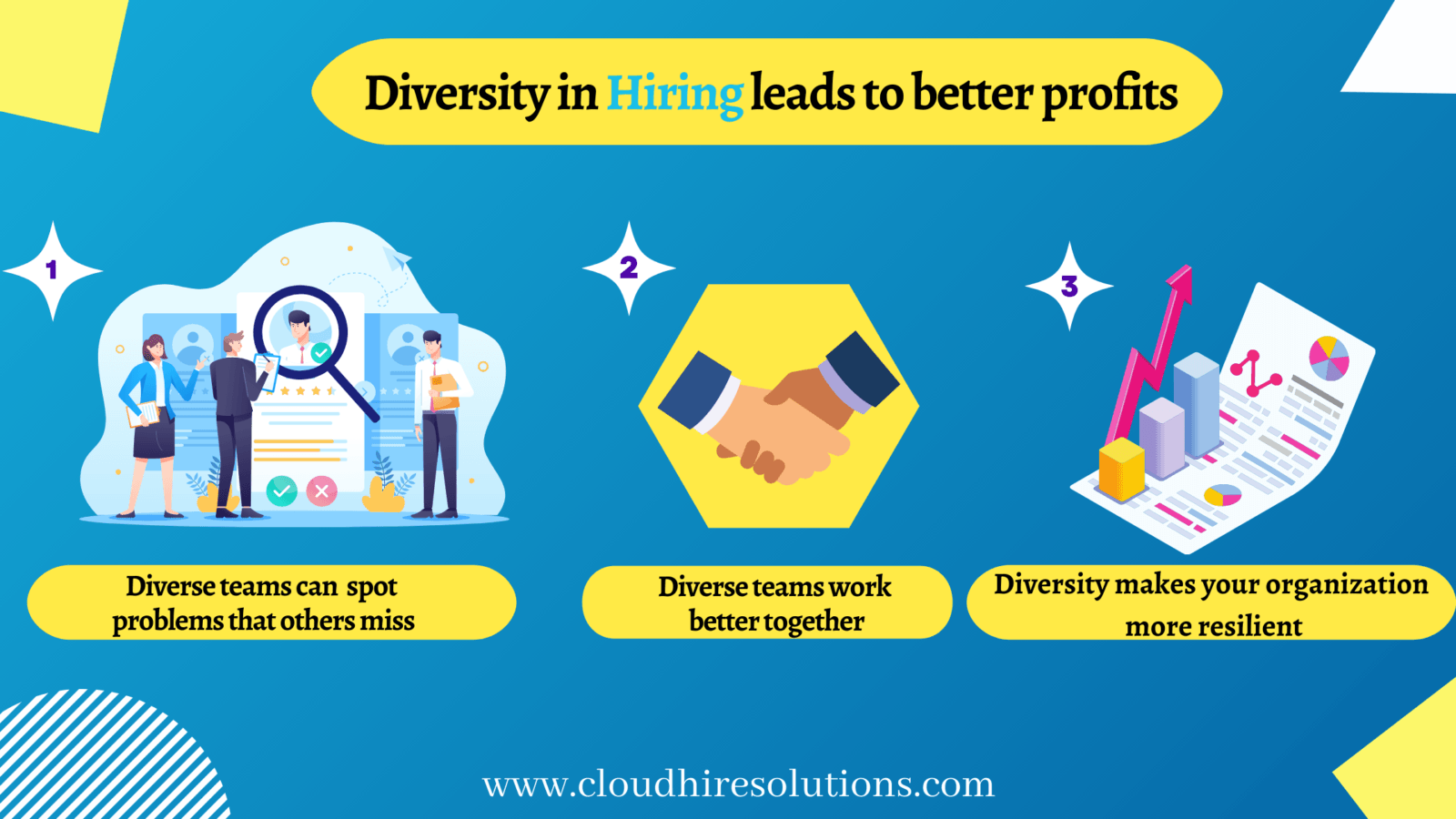
Teams built from these groups bring a wider range of experience to the problems your customers actually have. Diverse teams are better placed to spot assumptions, anticipate how different users will react, and avoid groupthink in decisions.
Where bias creeps into remote hiring
A remote process can be just as biased as an in-person one. The common failure points:
- Job descriptions. Long lists of “requirements” that are really preferences, inflated years-of-experience demands and jargon discourage qualified people from applying, particularly those who only apply when they meet every bullet point.
- Résumé screening. Names, university brands, employment gaps and familiar company logos all trigger snap judgements that have little to do with ability.
- Referral-heavy sourcing. Referrals are fast, but they tend to reproduce the network you already have.
- Unstructured interviews. When each interviewer asks different questions and scores on gut feel, “culture fit” becomes a proxy for “similar to us”.
- Time zones. Scheduling every interview in head-office hours quietly penalises candidates on the other side of the world.
- Video-call judgements. Accents, background noise, bandwidth and camera quality say nothing about someone’s work, yet they colour impressions of confidence and professionalism.
A process for inclusive remote hiring
1. Write the job around outcomes
Describe what the person will achieve in their first six to twelve months, then list only the skills genuinely needed to get there. Separate “must have” from “nice to have”, drop degree requirements that aren’t essential, and be explicit that the role is open to candidates across locations and time zones where that’s true. State the salary range if you can: it reduces negotiation gaps that disadvantage under-represented candidates.
2. Source beyond your usual channels
Post to global and regional job boards, partner with communities and organisations that support under-represented groups in your field, and track which channels your hires actually come from. If every shortlisted candidate comes from the same two sources, that’s a signal worth acting on.
3. Screen for skills, not signals
Replace or supplement résumé screening with a short, job-relevant assessment. A practical skill test lets candidates show what they can do regardless of where they studied or worked. Keep assessments short and fair: a multi-day unpaid project filters for free time, not ability.
4. Structure every interview
Ask every candidate for a role the same core questions, in the same order, and score answers against a written rubric agreed before interviews start. Structured interviews are consistently more predictive than informal conversations and much harder for bias to steer. Asynchronous and AI-assisted interviews can help here too: every candidate gets the same questions and can respond at a time that works in their time zone.
5. Make logistics accessible
- Offer interview slots across several time zones.
- Ask every candidate whether they need adjustments, such as extra time, captions or a phone option instead of video.
- Tell interviewers explicitly not to judge background, bandwidth or accent.
- Share what each stage involves in advance, so candidates can prepare on equal terms.
6. Decide with evidence
Have interviewers submit scores independently before any debrief, so the most senior or most confident voice doesn’t anchor everyone else. Compare candidates against the rubric, not against each other’s “vibe”. Consistent candidate scoring makes it easier to see why someone was or wasn’t hired.
Inclusion doesn’t stop at the offer
Hiring a diverse team is wasted if people then feel like outsiders. Remote teams need deliberate habits:
- Structured onboarding. Written guides, a named buddy and clear first-month goals help people from any background get productive quickly.
- Time-zone-fair meetings. Rotate meeting times, record important sessions, and make decisions in writing so people outside core hours aren’t excluded from them.
- Documentation over hallway knowledge. If information only travels in calls, people in distant time zones fall behind.
- Visible, fair growth paths. Remote employees can be overlooked for promotion simply because they’re less visible. Base reviews on outcomes, and check promotion rates across locations and groups.
Measure what’s happening
Track your hiring funnel stage by stage (applications, screens, interviews, offers and acceptances) and look for the stage where candidates from particular locations or backgrounds drop off disproportionately. That’s where to focus. Be careful about what personal data you collect: rules on gathering information such as ethnicity, disability or age differ between countries, so collect it only where it’s lawful, voluntary and kept separate from hiring decisions.
Hiring across borders
Employing people in other countries brings employment law, payroll, tax and benefits obligations that differ by jurisdiction. Many companies use an employer of record or a global staffing partner to hire compliantly without setting up a local entity in every country they hire in.
How CloudHire helps
CloudHire is built for skills-first, location-independent hiring. Candidates are assessed through practical skill tests and structured AI interviews, scored consistently, and verified before they reach your shortlist, so you can compare people on what they can do rather than where they come from. Talk to our team about building a more diverse remote team.
Hire faster with CloudHire
Search 700M+ profiles, run AI interviews and launch outreach on one platform — free to start, no demo call required.