Can AI avoid bias when training data reflects past inequalities? Can automated systems understand career breaks, caregiving years, or nontraditional learning? Can recruiters trust a recommendation that they cannot fully explain?
The goal is simple. Faster hiring should not replace fair hiring. If AI systems support good judgment, recruitment becomes more thoughtful. If they repeat old patterns at scale, then technology amplifies hiring risk. The difference depends on how organizations build, test, and guide these tools.
This is where the conversation starts.
Strengths of AI in Recruitment
AI recruitment tools bring consistent structure to candidate screening. A hiring team can review thousands of applicants without losing track, and platforms can filter based on job requirements with fewer errors. AI helps identify patterns in job histories, skills, and technical experience, and screens candidates who often get overlooked in traditional hiring.
Teams see gains in speed, clarity of documentation, and structured interview pipelines. A recruiter can focus on candidate conversations, while systems handle scheduling, reminders, and first-round checks. When used carefully, it becomes easier to reduce bias in recruitment AI and widen access for skilled people who may not have traditional credentials. A candidate with a strong open source development history, for example, may be surfaced through a talent intelligence platform rather than through a standard resume filter.
CloudHire, as one example in this space, works to align AI with human insight. The intention is simple. Help recruiters make informed choices without removing the value of experience and instinct.

Weaknesses and AI Recruitment Challenges
Strength does not remove difficulty. Many recruiters already question AI resume screening problems. A common concern is when systems choose candidates based on keyword matching alone, while ignoring context. A developer might have strong working knowledge of a skill, but may not include the exact phrasing an algorithm expects. The system filters them out, and the potential value disappears.
Another weakness appears around bias in AI hiring. AI learns patterns from past hiring decisions, and if those decisions contained bias, the model learns it. This creates a cycle that harms diversity. When a pattern becomes reinforced through automation, it grows faster and becomes harder to break.
These challenges show that AI needs careful oversight. Systems cannot measure passion, character, or problem-solving approach as well as a conversation can. AI does not understand the courage behind a career shift or the personal story behind an employment gap. Technology helps recruiters, yet it must never replace thoughtful evaluation.
Opportunities for Ethical AI in Recruitment
Opportunities grow for ethical AI in recruitment that respects transparency and human judgment. Talent acquisition leaders want models that explain decisions, not systems that behave like sealed boxes. When AI becomes clearer in how it evaluates skills and job alignment, trust strengthens.
Better AI hiring software comparison guides are needed in the market. Recruiters often choose based on feature lists, but long-term success relies on data quality, compliance standards, and the ability to train models with fair sourcing inputs. These areas create room for improvement.
AI also allows a stronger reach for skilled workers in nontraditional career paths. International hiring becomes simpler. Teams can discover candidates in locations not usually considered and invite them into global work. Automated tools can match people to opportunities they might never have seen without AI support.
This is where CloudHire and similar platforms focus on accessible hiring. When AI assists global screening and recruitment localization, companies welcome talents they might have overlooked.
Threats and Risks of AI in Recruitment
The risks of AI in recruitment create important ethical questions. A wrong classification can limit someone’s job prospects. An incomplete dataset can make systems judge candidates based on information that does not hold true. Privacy concerns continue to expand across regions, and companies face legal consequences when data is misused.
There is also a threat of overdependency. When hiring teams lose touch with candidate evaluation skills and trust algorithms without reflection, quality drops. A system cannot fully understand ambition, adaptability, or long-term cultural alignment. Recruiters carry that responsibility.
Another concern grows around automated hiring systems that reject applicants without review or feedback. Candidates feel discouraged and disconnected from employers. This harms brand reputation and slows long-term talent attraction.
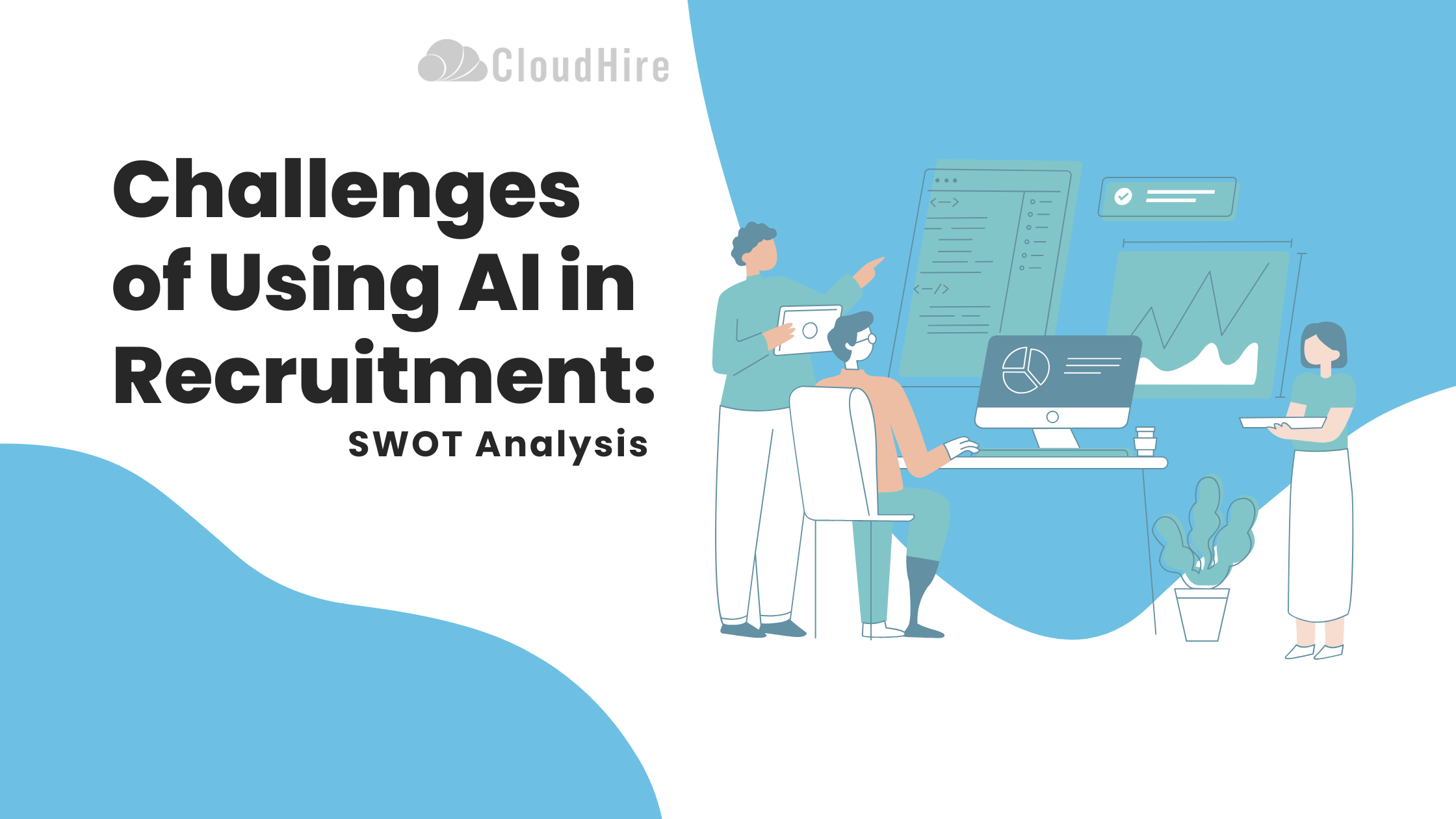
SWOT Summary Table for Quick Reference
| SWOT Area | Key Insight |
| Strengths | Faster candidate screening, consistent evaluation, and wider talent access |
| Weaknesses | AI resume screening problems, biased pattern learning, and a lack of context understanding |
| Opportunities | Ethical AI improvement, transparent model evaluation, and stronger global talent discovery |
| Threats | Privacy concerns, legal regulations, reduced human judgment, and reputation risks |
This table offers context for teams who want to build balanced AI hiring strategies.
How Hiring Leaders Can Respond to These Challenges
A responsible approach to AI hiring begins with clear guidelines and continuous review. Recruiters and HR teams benefit from calibration sessions where they check how AI tools classify candidate skills and experience. Stronger data improves outcomes, and clear communication helps candidates understand how their information is used.
Companies need practices that respect fairness. Standard steps include:
Screen small sample sets before applying rules across all applicants, check screening outputs with diverse hiring groups, and adjust models when patterns appear restrictive.
This way, talent teams remain involved, and AI assists without overpowering judgment.
CloudHire and AI Recruitment Tools Built for Trust
CloudHire supports hiring teams that want AI-guided sourcing with transparency and care. It focuses on improving access to skilled candidates and reducing screening time without closing doors to unique career backgrounds.
Our goal is not to replace recruiters. Our goal is to help hiring teams avoid overwhelm and spend more time in meaningful conversations with potential hires. When AI respects context, hiring feels more human, not less.
Insights From the CloudHire Team:
Early project data taught our team a valuable lesson. Keyword-only filters often miss top performers. For instance, one engineering candidate used domain-specific project terms that didn’t match standard job titles. CloudHire adapted its skills taxonomy to read contextual signals, not just literal matches. The result: faster identification of hands-on talent that other systems might overlook.
Final Thoughts
AI in recruitment carries a real possibility. It brings structure and reach that support modern hiring needs. At the same time, this SWOT analysis shows how AI recruitment challenges and risks of AI in recruitment require attention. Hiring remains a human decision. A system can highlight skill matches, but people understand stories, values, and long-term growth.
Recruiters have always read between the lines of resumes, listened to tone and intention, and noticed things that software cannot measure. AI helps, not by replacing this intuition, but by giving teams more space to use it with clarity.
When technology respects fairness and transparency, ethical AI in recruitment becomes not just a concept, but a path toward stronger, more thoughtful hiring. – Get in touch with Cloudhire.ai
Frequently Asked Questions:
1. Can AI understand nontraditional career paths?
AI hiring systems sometimes struggle to interpret career breaks, caregiving years, or changes in fields. Human review remains important so candidates are not judged only by gaps but also by growth, skills, and real contributions.
2. Are candidates told when AI is used in hiring?
Not always. Some companies explain their use of AI in privacy policies, but many do not give detailed information on how data is analyzed. Clear communication builds trust and helps candidates feel respected in the process.
3. What are the biggest risks of using AI recruiting tools?
Key risks include biased decision-making, lack of human judgment, candidate data privacy concerns, and over-reliance on automated screening.