Monday arrives, and you want a gentle start. You want focus without noise. You want a simple plan that brings clarity and not pressure. Remote work already gives freedom, yet Mondays can still create stress because your work and personal space share the same walls. When the week begins without a clear mind, tasks feel heavier and motivation drops before you even open your laptop. This is where work from home productivity is often won or lost, not in tools, but in how the day begins.
You deserve a Monday that supports you. A Monday that respects your energy and creates ease for the rest of the week.
Take a slow breath. Let us start.
Begin Your Week Without Noise and Rush
A productive remote Monday does not start at the desk. It starts in the first few quiet minutes after you wake up. Many people begin their week by checking messages and scanning tasks in bed. This habit adds stress before your body wakes fully. You can replace this with a slower arrival into the day.
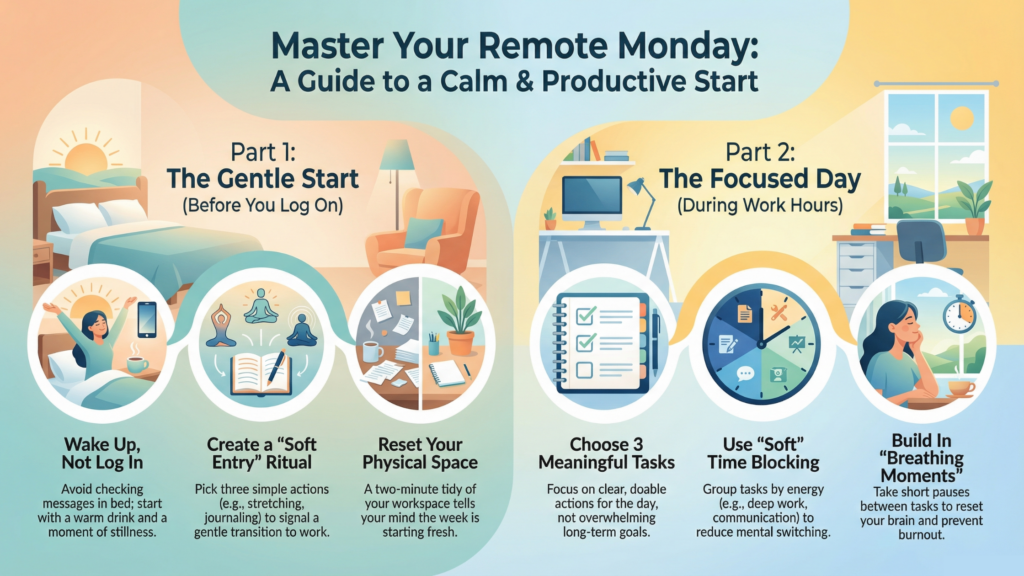
Sit with a warm drink and allow your mind to settle before work thoughts enter. A short moment of stillness helps you beat Monday blues when working from home because your mind gets time to organize itself. The day feels lighter when your first hour is not filled with screens and notifications. A remote job gives space for this kind of slow morning, and you can use it to save mental energy and support better focus.
A Morning Ritual That Supports a Calm Mind
Not all routines need strict steps. You can build a morning ritual that feels like a soft entry into your work week. Choose three actions that tell your mind you are moving gently toward work. For example:
- A short stretch that releases tension
- A quiet breakfast without scrolling
- A few lines in a notebook about how you want your week to feel
This ritual creates a signal for your brain that you are moving from personal space into work space. When you start your work week remote, this small signal helps your focus grow naturally and supports steady work from home productivity. It does not matter if your ritual is short. What matters is the feeling of transition. The shift helps your mind stay present and reduces the chance of a scattered start.
Make Monday Tasks Simple, Not Heavy
Many people try to fix an entire week on Monday. They plan new habits, new systems, and long-term goals while still carrying weekend thoughts. That much pressure can make you freeze. Instead, use Monday for orientation and not full-speed execution.
Choose three tasks that carry the most meaning for your week. Tasks, not goals. Clear and doable actions. Your remote work productivity tips become useful only when you remove unnecessary weight from the day. A focused Monday helps you start your work week remote with more intention and less noise. It allows you to use the rest of the week with more control and less stress.
Use Time Blocking for Remote Workers Who Want Peace
Time blocking does not need to become a strict schedule with every minute filled. You can use it as a soft structure that helps you move through your day without losing flow. Instead of squeezing many tasks into one hour, create open blocks around similar work.
- A communication block for emails and messages
- A deep work block for tasks that need attention
- A personal block for lunch and a break that gives rest
This approach improves work from home productivity because your mind does not switch tasks constantly. Your thoughts stay organized, and your actions feel smoother. When you create your work from home schedule Monday, think about energy first and time second. Your best work comes from a focused mind, not a busy one.
Reset Your Remote Space So Your Mind Feels Clear
Your workspace affects your attention. A remote job can blur life and work, which makes your space feel mentally heavy. A two-minute reset can change the tone of your morning.
- Remove items you do not need
- Keep only what supports your tasks
- Allow natural light if possible
This simple reset tells your mind the week is starting fresh. You create a sense of control and stability, which directly improves work from home productivity throughout the day with greater clarity.
Create Breathing Moments Between Tasks
You do not need to rush from one task to another. A short pause gives your brain a reset so you do not carry stress forward. You can sit with your eyes closed for a few seconds or take a small walk across the room. You can drink water slowly, not while typing. These quiet pauses prevent burnout and improve decision making.
When you beat Monday blues when working from home, it usually happens in the pauses, not the tasks. Your mind gains freedom to think clearly again.
Let Your Body Join Your Work, Not Fight It
Remote workers sometimes move less, which affects focus. Gentle movement helps your mood and thinking. You can stretch your neck and shoulders before you start. You can walk for two minutes after finishing a task block. Your body is part of your work routine, not separate from it. When it feels supported, work from home productivity improves naturally, without forcing discipline or long routines.
Protect Your Start From Unnecessary Meetings
Meetings on Monday mornings can be heavy because your week has not formed its direction yet. If possible, use the first hour for planning and important work. You can communicate with your team and request meetings after you settle into the day. Some teams use shared documents, voice notes, or asynchronous updates so everyone stays informed without losing momentum.
End Your Monday With a Soft Review
A productive Monday is not about finishing everything. It is about starting your week remotely with clarity and calm focus. At the end of your day, reflect on three things:
- What worked well
- Where your energy dropped
- What you want to adjust tomorrow
This review keeps your week aligned. It supports saving time because you enter Tuesday with direction.
Work From Home Does Not Need to Feel Lonely
Some people feel isolated on Mondays. You can create a connection without losing focus. A short message exchange with a friend or coworker can help you feel supported. A shared virtual coffee moment can help restore warmth in your day. Human connection keeps your week steady.
Your Monday Can Start With Ease
A work from home Monday does not need to feel like a mountain. It can feel like a gentle beginning that respects your rhythm and creates space for better work. Small changes in your morning can shift your entire week. You can create a remote work morning routine that keeps you centered. You can build a schedule that feels supportive and not overwhelming. You can work with more peace and less pressure.
Your Monday morning sets the tone. Let it be quiet, clear, and kind to your mind. Work doesn’t have to mean office – Explore Cloudhire
Frequently Asked Questions
How can I beat Monday blues when working from home?
Start with a slow morning, avoid early screen time, choose three meaningful tasks, and add small pauses between work blocks.
What are simple work from home efficiency tips for Monday?
Keep tasks light, reset your work space, use gentle time blocking, and end with a short reflection. Remember, let your body join your work, not fight it.
How to stay productive while working remotely?
Stay productive by giving your day a clear shape and protecting focus time. Studies show remote workers do best when they have a set routine, a defined workspace, and clear priorities for each day, instead of reacting to messages all the time.
Helpful habits:
- Start with a short plan: 3 main tasks you must finish.
- Work in focused blocks (for example, 50 minutes of work, 10 minutes break).
- Keep a separate workspace if possible, and mute non-urgent notifications during deep work.
These patterns reduce distractions and make your hours count more, even if you work slightly fewer hours than in an office.
Does working from home increase productivity?
For many people, yes, but it depends on the job, home setup, and how work is organized. Several large studies found that remote or hybrid workers often report equal or higher productivity than office workers, helped by less commuting, fewer office interruptions, and more control of their schedule.
Other research finds that fully remote setups can be slightly less productive on average than fully in-office, but still cheaper for companies and better for work–life balance. The overall message: working from home can increase productivity when tools, expectations, and habits are good; it can hurt it when collaboration is messy or home distractions are high.
Are remote workers really working all day?
Remote workers tend to work differently, not always less. Time-use data suggests many remote employees log fewer “on-the-clock” hours at home than in the office, but they also save commute time and often shift some of that time into focused work, chores, or rest.
Surveys and monitoring studies show that, on average, remote workers can be as productive or more productive in fewer hours, especially when they have the flexibility to work at their most focused times. Online discussions also show a pattern: people admit they take breaks for errands or walks at home, but say