Rethinking Your Approach to Truly Stand-Out DEI Candidate in 2026
(And Why Kamala Harris Isn’t Just a Talking Point)
The Core Shift: DEI Candidates Aren’t a “Category” – They’re Your Future Culture
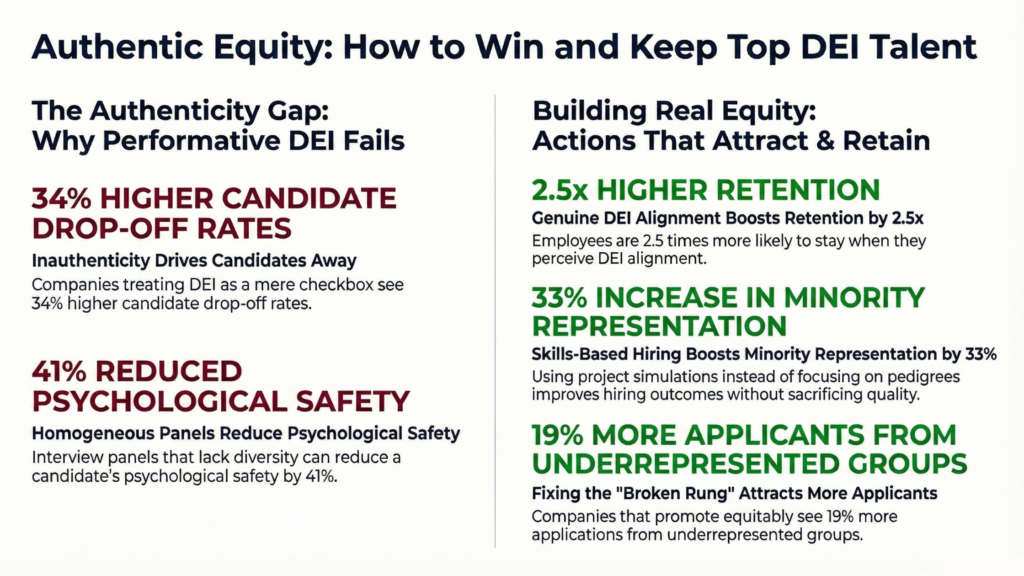
Let’s clarify upfront: A “DEI candidate” refers to individuals from historically underrepresented groups who also evaluate employers based on tangible diversity, equity, and inclusion practices. They don’t just want roles; they want proof that your culture aligns with their values. As research shows, companies treating DEI as a checkbox see 34% higher candidate drop-off rates. The key? Authenticity over optics.
Redefining the DEI Candidate Experience: Beyond Recruitment Theater
Candidate experience is the silent dealbreaker. Consider these non-negotiable upgrades:
- Pre-screening with AI? Tread carefully. While tools like NLP++ resume parsers can reduce bias, over-reliance creates impersonality. Top talent feels disengaged when AI chatbots lack nuance for non-linear career paths. Balance tech with human touchpoints.
- Transparency from Day 1: Share salary bands in job descriptions. DEI candidates prioritize equity – vague terms like “competitive pay” signal risk.
- The Meeting Test: Does your panel reflect the diversity you champion? Homogeneous interview panels reduce psychological safety by 41%.
Practical Fix: Implement post-interview surveys specifically asking DEI candidates: “Did our actions match our stated values?” Track trends monthly.
The Harris Effect: When Symbols Meet Substance
Kamala Harris’s presidential candidacy matters because she embodies systemic change – but name-dropping her without action backfires. DEI candidates correlate your mention of “trailblazers” with internal promotion rates. If leadership lacks diversity, referencing external figures feels performative.
Instead: Audit retention, not just hiring. Employees staying 3+ years in diverse teams report 27% higher innovation output. Show promotions pathways, not just inspiring keynotes.
Building Magnetic Employer Equity: Three Uncommon Levers
- Fix the “Broken Rung” Early
DEI isn’t just about entry roles. Mid-career candidates, check your management diversity. Companies promoting equity see 19% higher applications from underrepresented groups. Publish internal mobility stats. - Redefine “Quality” Beyond Pedigrees
Elite university bias persists. Prioritize skills assessments (e.g., project simulations) that boost minority hiring by 33% without compromising quality. - Collaborate Beyond HR
Marketing teams using inclusive imagery see 21% higher engagement from DEI talent pools. Sync employer branding with customer-facing DEI campaigns.
Why Retention Is Your Secret Weapon
Attracting talent means nothing if they leave. Perceived DEI alignment increases retention by 2.5x while directly impacting well-being. Simple retention tools:
- Microaffirmation Training: Teach teams to validate contributions daily. Reduces attrition in high-stress roles.
- Flexibility as Equity: Remote work options disproportionately support caregivers and neurodiverse talent.
Your 2026 Checklist
- Audit AI recruitment tools quarterly for embedded bias
- Showcase real DEI employee stories, not just polished testimonials
- Tie 30% of leader KPIs to mentorship/sponsorship outcomes
Authenticity builds the employer brand that DEI candidates trust.
No “diversity theatre,” just proof you value their humanity.
Frequently Asked Questions
1. What questions do DEI candidates face in interviews?
DEI candidates often face standard behavioral questions plus some on inclusion:
- “Tell me about a time you worked with a diverse team.”
- “How have you advocated for others who are different from you?”
These check cultural fit and collaboration skills, not quotas.
2. Are DEI candidates less qualified?
No evidence supports this. Studies show diverse teams (including DEI hires) perform equally or better on innovation and problem-solving. DEI candidates go through the same skills assessments; the difference is broader sourcing and bias checks.
3. Do DEI candidates get special treatment in hiring?
No, most DEI programs standardize the process to be fairer for everyone: blind resume reviews, structured interviews, and skills tests. Special treatment risks backlash and legal issues; the goal is equal opportunity, not preference.
4. Is DEI hiring declining in 2025?
Some companies scaled back public DEI language after legal challenges, but diverse hiring remains a priority. Focus shifted to “skills-based” and “inclusive” language, but goals for representation continue quietly through internal metrics.