The exciting part of remote medical assistant jobs? These roles offer real career growth, flexibility, and strong earning potential if you understand how the industry is evolving and what skills employers now value the most.
Telehealth is now part of everyday care, digital tools are everywhere, and clinics want support that works smoothly from anywhere. Because of this shift, remote medical assistant jobs have moved from simple admin positions to essential roles that keep healthcare systems organized and responsive.
This guide breaks down what today’s remote medical assistant job market looks like, what skills actually matter, how to stand out, and where to find the best opportunities.
What a Modern Remote Medical Assistant Really Does
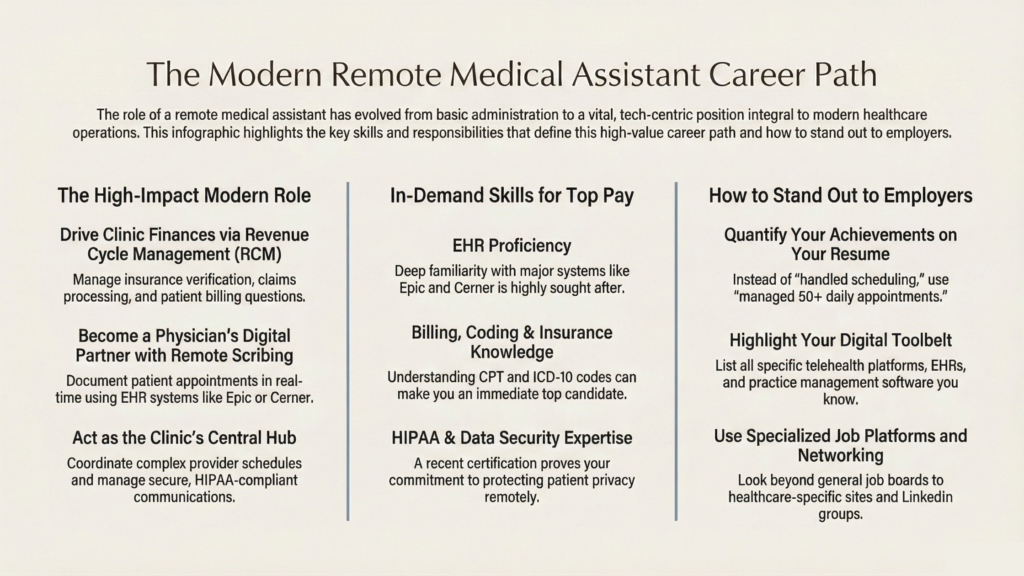
A remote medical assistant is more than someone who schedules appointments or answers calls. Today, they act as digital partners to medical teams. They keep clinics running smoothly, help patients navigate the system, and support providers during both in-person and virtual visits.
Here’s what the role really looks like:
- You help manage busy, fast-moving clinic schedules across time zones.
- You collect patient details and prepare charts before virtual or in-person appointments.
- You support billing, coding, claims, and insurance verification, critical tasks that impact revenue.
- You document patient encounters in real time inside EHR systems.
- You ensure communication between providers, pharmacies, labs, and patients runs without delays.
This is why medical assistant jobs remote now require tech confidence, attention to detail, strong communication, and the ability to work independently.
Daily Tasks That Make the Biggest Impact
Remote MAs touch almost every part of patient care. The following responsibilities make the role high value (and often higher paying):
1. Scheduling & Calendar Coordination
You may manage calendars for multiple providers across multiple locations. This includes:
- Handling last-minute rescheduling
- Managing waitlists
- Sending automated reminders
- Reducing no-shows
Tools often used: Athenahealth, Calendly, SimplePractice.
2. Revenue Cycle Management (RCM)
This is one of the most valuable skill areas because it affects a clinic’s financial stability. Typical tasks include:
- Insurance verification
- Processing claims
- Managing denials
- Answering patient billing questions
- Prior authorizations
RCM experience makes you stand out immediately.
3. Virtual Patient Intake
You gather information like:
- Medical history
- Medications
- Allergies
- Screening questions
This helps doctors start their visits prepared.
4. Remote Scribing & EHR Management
Many clinics now rely on remote scribes to document appointments in real time. This requires:
- Fast, accurate typing
- Familiarity with EHRs like Epic, Cerner, or Kareo
- Understanding medical terminology
It saves physicians hours every day.
5. Secure Communication & Triage
You help prioritize messages between patients, nurses, and doctors while keeping everything HIPAA-compliant.
This combination of tasks means the role is no longer “basic,” it’s essential.
Skills That Make You Competitive in Today’s Market
To get a high-paying remote medical assistant job, you need more than basic administrative knowledge. Employers now prefer candidates who show advanced readiness in these areas:
EHR Proficiency
Epic and Cerner are the most in-demand, but other systems matter too. Many offer free online learning modules.
HIPAA & Data Security
Remote roles require strict attention to:
- Patient privacy
- Secure data handling
- Proper communication channels
- Avoiding PHI exposure
A recent HIPAA certification is a huge advantage.
Billing, Coding & Insurance Knowledge
Understanding CPT, ICD-10, and basic billing workflows can make you competitive immediately.
Strong Written Communication
Nearly everything you do will be written:
- Notes
- Emails
- Chart updates
- Patient instructions
Clear, simple writing is often more important than speaking skills.
Tech Comfort
Remote medical assistants often use:
- EHR systems
- Telehealth platforms
- Ticketing systems
- Messaging tools
- Electronic faxing
- Practice management systems
These tools help clinics operate efficiently, and your ability to learn them quickly matters.
Impact of Key Skills on Remote Medical Assistant Career
Beyond titles and tools, certain skills have a direct impact on your value and earning potential in remote medical assistant jobs. The table below shows how.
| Skill Area | What It Looks Like in Daily Work | Measurable Impact for Employers | How It Helps Your Earnings/Growth |
| Telehealth Platform Support | Guiding patients into virtual visits, troubleshooting audio/video, helping them use portals during calls. | Fewer cancelled or failed appointments, smoother visits, higher patient satisfaction scores. | Practices value you as “essential for virtual care,” which supports higher hourly rates and long-term retention. |
| Advanced EHR Navigation | Quickly updating charts, pulling past records, entering orders, and documenting visits in real time across multiple providers. | Shorter visit times, more accurate documentation, and fewer charting backlogs. | Strong EHR users are often first in line for raises, remote scribe lead roles, and specialist titles. |
| Revenue Cycle Awareness | Catching missing insurance details upfront, flagging coding issues, and helping resolve patient billing questions. | Lower claim denials, faster reimbursements, and better collection rates for the clinic. | RCM-aware MAs can negotiate higher pay and move into billing, auditing, or RCM specialist positions. |
| Patient Education & Follow-Up | Sending clear instructions, checking on symptoms after visits, and reinforcing care plans through secure messages. | Better treatment adherence, fewer unnecessary repeat visits, and stronger patient loyalty. | Clinics see you as part of care quality, not just admin, which supports title upgrades and bonuses tied to satisfaction. |
| Workflow & KPI Tracking | Monitoring task queues, response times, and daily output; flagging bottlenecks in scheduling or documentation. | Higher overall productivity, clearer staffing decisions, and less overtime for on-site staff. | Experience with KPIs prepares you for coordinator, team lead, and operations-focused remote roles. |
How to Optimize Your Resume for Remote Roles
Many applicants miss good opportunities simply because their resume doesn’t show the skills employers expect.
Tips That Actually Work
1. Use a keyword-rich headline
Example:
“Remote Medical Assistant | EHR Specialist | HIPAA Certified | RCM Support”
2. Quantify your achievements
Show real results instead of vague responsibilities.
- Weak: “Handled scheduling.”
- Strong: “Coordinated 50+ daily appointments with a 98% patient satisfaction rating.”
3. Highlight remote tools
List telehealth and digital systems you’ve used.
4. Keep design simple
Fancy templates confuse ATS. Stick to clean formatting.
5. Use targeted cover letters
Explain how your experience solves the employer’s everyday challenges, not just your career goals.
6. Let tools support the heavy lifting
Instead of worrying about formatting, keywords, or ATS issues, use a platform that supports every step of your job search resume optimization, skills assessments, role matching, and interview readiness so you can focus on building your strengths. If you want all that in one, Cloudhire can guide you through your remote journey with clear, practical insights.
Where to Find the Best Remote Opportunities
General job boards are okay, but they’re crowded. For better results, use a mix of targeted sources:
1. Specialized Remote Platforms
CloudHire often lists high-quality medical assistant remote jobs.
2. Healthcare-Focused Sites
- Health eCareers
- American Medical Association career portal
- Professional medical networking groups
3. Telehealth Companies
Check hiring pages for:
- Teladoc
- Amwell
- Included Health
These are some companies that often post medical assistant remote jobs before they appear on Indeed or LinkedIn.
4. LinkedIn Networking
Join:
- Healthcare operations groups
- Medical assistant communities
- RCM and health IT groups
Networking gets you noticed faster than applications alone.
Career Growth & High-Potential Specializations
Remote work doesn’t limit growth; if anything, it creates more pathways.
1. Remote Patient Monitoring (RPM) Specialist
You track patient vitals through digital devices. This field is growing quickly due to chronic condition management.
2. Health Information Technician (HIT)
For those who love data, accuracy, and compliance.
3. Remote Medical Scribe Team Lead
Managing scribes across multiple clinics.
4. Freelance or Agency Owner
Experienced remote MAs can build independent contracting businesses specializing in:
- EHR support
- RCM services
- Scribing
- HIPAA compliance
- Virtual front-desk operations
Are There Really Good Remote Medical Assistant Jobs? (Yes.)
Many people ask: Are there remote medical assistant jobs that pay well, offer growth, and provide long-term stability?
The answer is yes, but you must match your skills to modern industry needs.
Employers now look for:
- EHR experience
- RCM understanding
- Strong communication
- Tech readiness
- Independence
- Reliability
If you focus on building these skills, you can create a career that offers flexibility, financial stability, and meaningful contribution.
Final Thoughts
The field of medical assistant remote jobs is expanding quickly because healthcare is becoming more digital, more efficient, and more patient-centered. With the right mix of skills, tools, and preparation, you can find high-quality opportunities, whether you’re searching for remote medical assistant jobs near me or medical administrative assistant jobs remote.
This career path offers real value:
- Stability
- Flexibility
- Growth
- Purposeful work
And for many people, that combination is worth everything.
You don’t have to figure it all out – Cloudhire can point you to roles that fit your strengths.