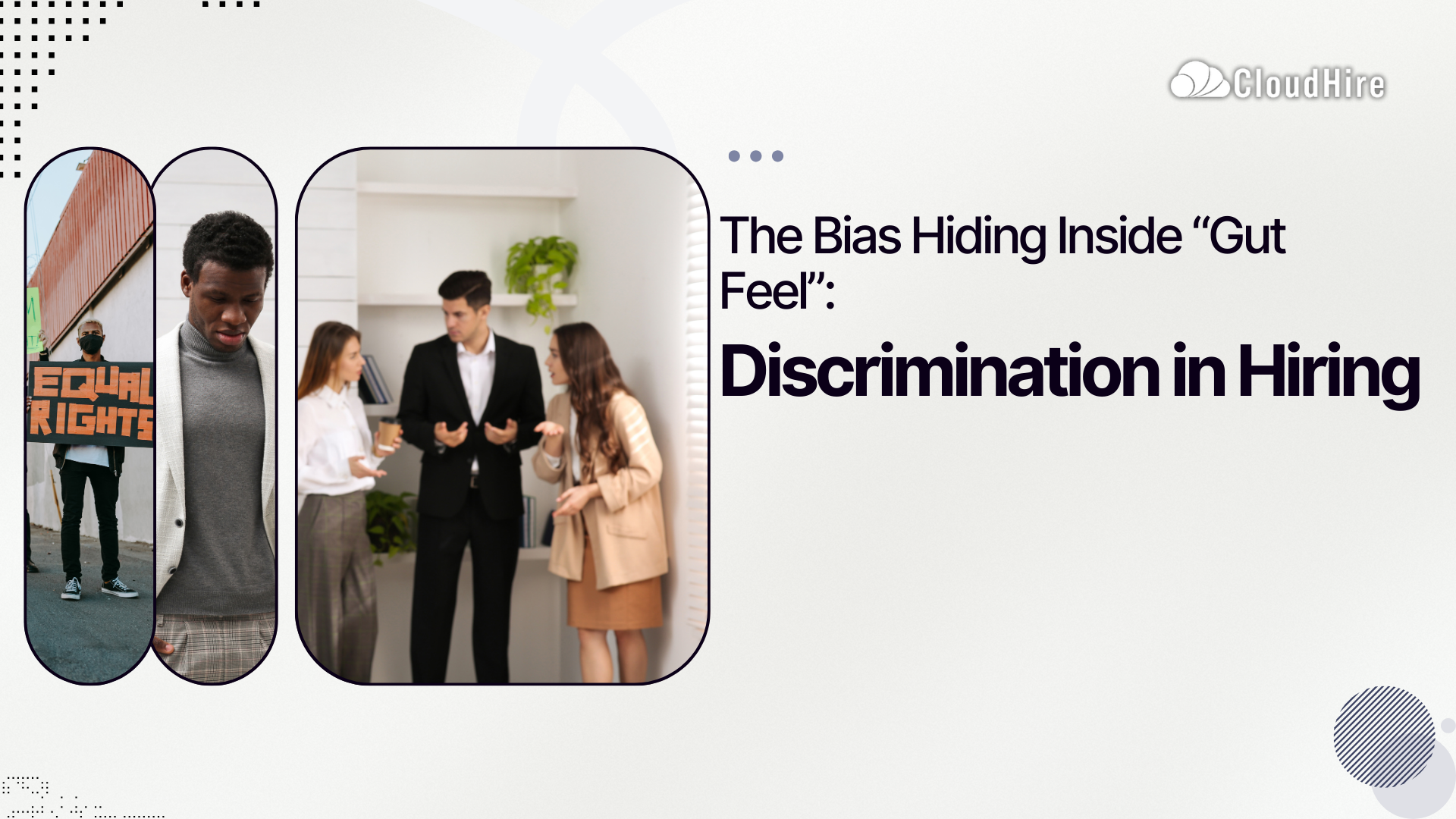
For years, research has shown that discrimination in hiring is real, measurable, and still happening. Even with modern tools, new guidelines, and public promises around fairness, many candidates continue to face unequal treatment. The issue is not only old biases, but it’s also the way hiring systems reward instinct instead of evidence, patterns instead of potential, and speed instead of accuracy. When we understand how both obvious and subtle bias work, we can rebuild hiring so it opens doors instead of quietly closing them.
Hiring shapes people’s lives. It affects financial stability, long-term growth, and the ability to plan for the future. So when unfair barriers block opportunities, the impact is very real. It affects confidence, well-being, and career direction. This article breaks down what research says about bias, why new technology doesn’t always solve the problem, and what solutions actually work.
What Experiments Reveal About Hidden Barriers
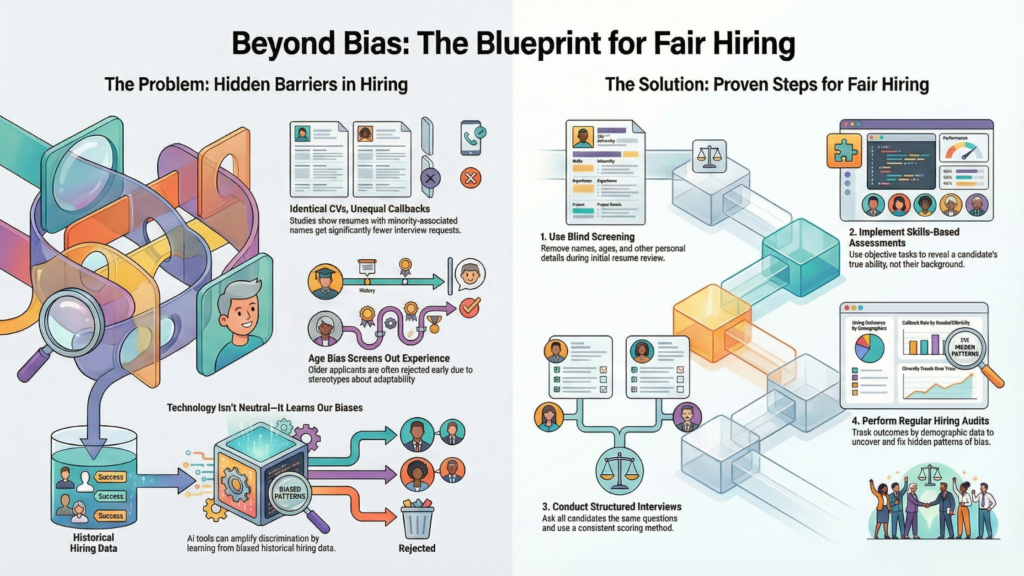
Field studies across Europe, the US, and Asia show a clear pattern: when two CVs are the same, but the names are different, callback rates often shift sharply. In an experiment, resumes with minority-associated names received far fewer interviews. This connects directly with rising concerns around name discrimination in hiring, especially for people applying in competitive or traditional industries.
Studies on racial discrimination in hiring practices show similar gaps. Researchers found that even candidates who exceed job requirements are held back by subtle cues like school names, neighborhoods, or languages. Many employers believe they make decisions based on merit, but in reality, long-held assumptions often influence them without them realizing it.
Age adds another challenge. Research tracking age discrimination in hiring shows older applicants are often rejected earlier, even for roles where their experience should be an advantage. Studies on age discrimination in hiring practices show that employers assume older workers won’t adapt to new technology or won’t stay long. These stereotypes remain common even though data shows older workers often excel in reliability and consistency.
Some candidates notice warning signs quickly. Delays in scheduling, comments about being “overqualified,” or unusual questions about future plans can signal subtle bias. Many job seekers aren’t sure whether it’s just a bad interview or actual signs of age discrimination in hiring, which makes the experience more discouraging.
How Bias Shapes Performance and Workplace Culture
Bias doesn’t stop after someone is hired. Research shows managers’ attitudes directly influence how employees perform. When employees report to biased supervisors, they face more interruptions, fewer growth opportunities, and lower psychological safety. This affects performance, yet employers often blame the employee instead of the environment. Over time, this creates a cycle where biased outcomes look “justified,” even though they started with unequal treatment.
Research on disability and long-term illness shows similar issues. Many people feel pushed into restarting their careers because workplaces don’t provide proper accommodations or cling to narrow ideas of “good performance.”
In some sectors, questions around religion also appear. Candidates sometimes wonder: can a religious organization discriminate in hiring? Laws usually allow religious institutions to prefer members of their own faith for certain roles, but they still must follow broader civil rights laws. This detail is often misunderstood, creating confusion for both employers and applicants.
Technology Isn’t Neutral, It Learns Our Biases
Many people assume AI can fix human bias. Research shows the opposite: AI learns from past patterns, including biased ones. When companies rely too much on automated screening, they often trust outcomes simply because a machine produced them, even when the reasoning is flawed.
Studies show automated tools sometimes downgrade resumes from women, older applicants, or minority groups. Tools built to speed up hiring can repeat discrimination in hiring practices unless they are carefully audited.
One concerning trend: people often see algorithmic unfairness as “less harmful” than human bias. This false belief reduces accountability and lets biased results slip through unnoticed. That’s why transparency, clear scoring rules, and third-party reviews are essential.
Governments are responding by creating laws against discrimination in hiring that include AI-specific requirements. These rules remind companies that fairness must apply at every stage, not just during interviews or final decisions.
What Actually Reduces Discrimination in Real Hiring Environments
When companies redesign their processes with intention, real improvement follows. Research shows structured and consistent hiring practices perform better than informal judgment. Proven steps include:
1. Skills-based assessments
Objective tasks reveal true ability and reduce assumptions. They work especially well in reducing bias against older candidates or those from unfamiliar backgrounds.
2. Blind screening in the early stages
Removing names, ages, and unnecessary personal details helps cut early-stage bias. It’s not perfect, but it’s one of the few interventions backed by strong data.
3. Structured interviews
Asking the same questions and using the same scoring method for every candidate reduces snap judgments. Interviewers stay focused on what matters.
4. Clear communication about expectations
When candidates understand timelines, evaluation criteria, and needed documents, unfair treatment is easier to spot and address.
5. Regular hiring audits
Tracking results by gender, race, age, disability status, and other legal factors helps uncover hidden patterns that would otherwise stay unnoticed.
These steps fit long-standing advice on how to prevent discrimination in the hiring process. They make fairness measurable instead of vague.
What Candidates Can Do When Something Feels Wrong
Unfair treatment is hard to prove, but documentation helps. If someone feels they experienced bias, they can:
- Write down exact comments or questions from interviews
- Save emails, job descriptions, and communication timelines
- Compare their experience with the company’s stated hiring process
If needed, they can look up how to report discrimination in hiring through labor boards, the EEOC, or regional authorities. For age-related bias, keeping a detailed record strengthens cases related to how to prove age discrimination in hiring.
These steps aren’t about conflict; they help protect applicants and promote fairness.
A More Inclusive Model Helps Everyone
The goal isn’t only to reduce discrimination in hiring, it’s to build systems that recognize real skill, spot potential early, and remove unnecessary noise from decision-making. Diverse teams bring fresh ideas. Inclusive workplaces innovate faster. Transparent systems build trust and improve performance.
When companies reduce bias, they tap into talent they might have overlooked. When candidates are treated fairly, they feel confident and stay longer. And when hiring is guided by proven methods instead of quick instincts, organizations make better long-term decisions.
Fair hiring isn’t just the right thing to do; it works. Processes built on evidence and transparency create workplaces where opportunities are real, progress is visible, and talent finally gets the space to shine.
Frequently Asked Questions:
What are the most common types of hiring discrimination today?
The most reported biases are based on ethnicity, age, and gender, followed by disability, religion, and sexual orientation. It shows up in who gets callbacks, who gets “culture fit” labels, and who never makes it past screening.
What are examples of discrimination in hiring?
- Ignoring CVs with “foreign” names.
- Asking women about marriage or kids, not skills.
- Rejecting older candidates as “overqualified” or “not a culture fit”
If a protected trait would change the decision, that is discrimination.
Is discrimination in hiring illegal?
Yes. In many countries, laws ban hiring decisions based on race, color, religion, sex, national origin, age, disability, and often sexual orientation and gender identity. These laws give rejected candidates the right to complain or sue when bias is proven.
How do companies accidentally discriminate in hiring?
Most do it unintentionally through:
- Biased job ads (“young, energetic”, “native speaker”).
- Referrals that clone existing demographics.
- Unstructured interviews driven by “gut feel”.
What feels “neutral” can still be deeply unfair.
How can recruiters reduce discrimination in hiring?
Practical steps that actually work:
- Use neutral, skill-focused job descriptions.
- Blind-screen CVs (hide name, age, photo, address).
- Run structured interviews with the same questions and scorecards.
Train hiring managers on bias and review hiring data regularly.