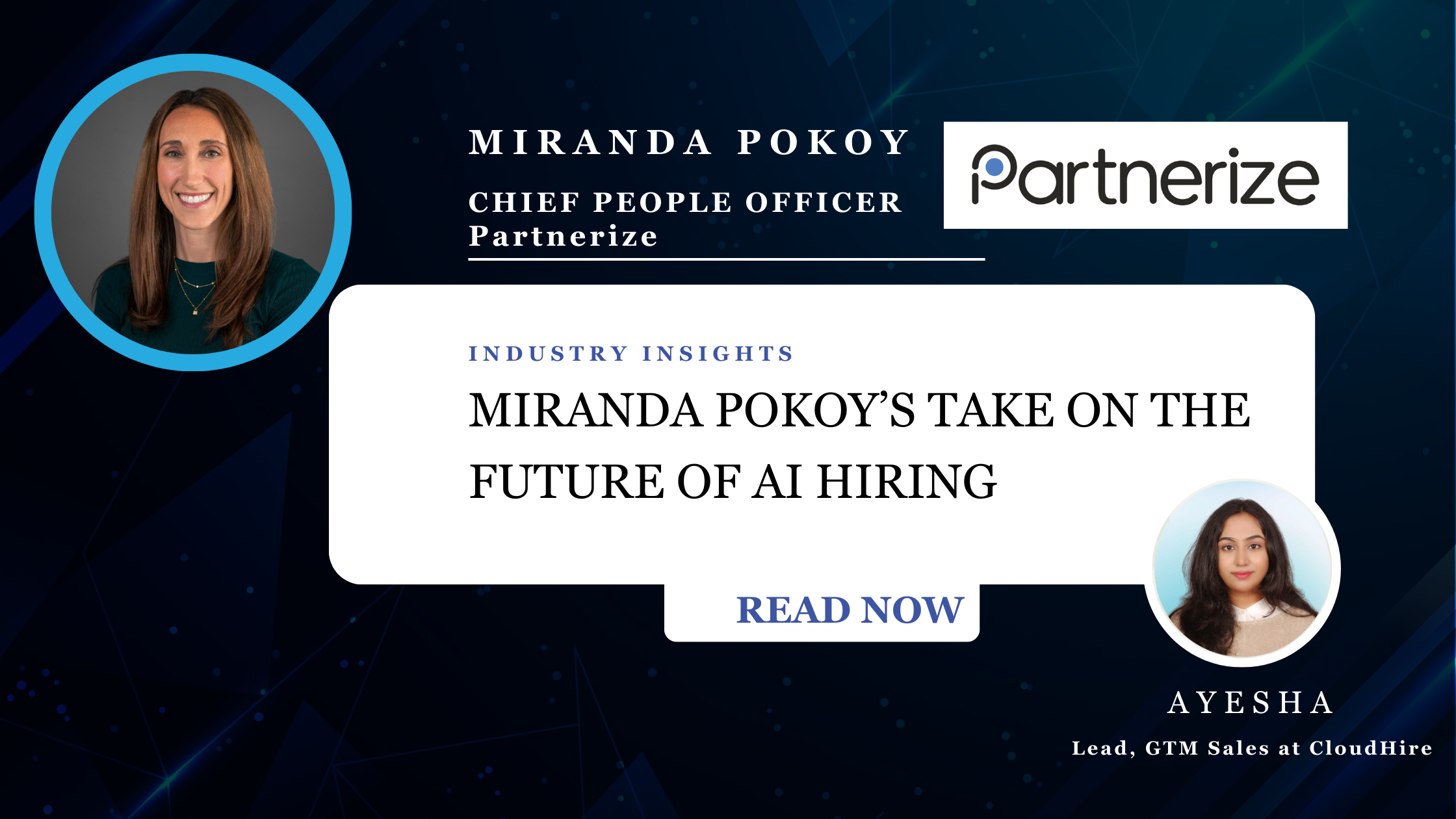
An exclusive Scaling Remote conversation with Chief People Officer Miranda Pokoy at Partnerize on building inclusive, high-performing teams while leveraging AI to solve global hiring challenges.
Introduction: Why the Future of Hiring Demands Both AI and Empathy
The hiring landscape has changed more in the last five years than in the previous fifty. From global talent pools to AI-assisted candidate screening, the rules of recruitment are being rewritten in real time. For Miranda Pokoy, a seasoned HR strategist, one truth remains constant: technology is only as good as the humanity behind it.
“You can automate a process, but you can’t automate trust.” – Miranda, Chief People Officer at Partnerize
In this in-depth interview for the Scaling Remote series, Miranda shares her insights on how organizations can navigate an increasingly complex hiring environment by combining the speed of AI with the depth of human connection.
From Traditional HR to AI-First Recruitment
Miranda’s career began in the pre-digital age of hiring, when resumes arrived by fax and interviews were strictly in person. Today, she leads HR in a world where AI-powered recruitment tools can screen, skill-test, and verify candidates from anywhere in minutes.
But her approach has not lost its human touch. She believes the best recruiters will use AI as an enabler, not a replacement.
The shift in her words:
- Then: HR focused on filtering candidates from a small, local pool.
- Now: HR must curate top talent from a vast, global network.
CloudHire Recruitment is one of many companies building tools that address this complexity by automating admin-heavy tasks so that HR leaders can spend more time building relationships and less time managing logistics.
Building an Inclusive Global Talent Strategy
One of Miranda’s biggest priorities is ensuring that the move to AI recruitment does not widen the gap for underrepresented talent.
“AI can open doors to a global talent pool, but only if we train it to recognize skill over stereotype.”
She emphasizes the importance of skill-based evaluation. Many modern HR platforms now focus on measurable competencies rather than education or location, enabling companies to identify qualified candidates who might otherwise be overlooked.
Her framework for inclusive hiring includes:
• Skill-first screening to minimize bias.
• Standardized testing to compare candidates fairly.
• Cultural fluency training for hiring managers to work effectively with global teams.
Overcoming the New HR Bottlenecks
While AI eliminates many traditional hiring challenges, it also creates new ones:
• Candidate authenticity. The rise of AI-generated resumes makes verification critical.
• Data overload. Recruiters now face more candidate data than ever, but not all of it is useful.
• Compliance across borders. Navigating employment laws in multiple countries is increasingly complex.
Tools in the HR tech space address these issues through:
• AI-powered fraud detection to identify fake candidates.
• Identity verification matched to government records.
• Localized compliance tools for international hiring.
Miranda believes these features are not “nice to have.” They are essential for any company hiring remotely at scale.
Retention: The Forgotten Half of Recruitment
Miranda is quick to point out that hiring does not end when a candidate signs the offer letter. In fact, that is when the real work begins.
“Recruitment is only half the equation. Retention is where companies win or lose.”
She stresses that AI can play a role here too, from onboarding bots that answer policy questions instantly to engagement analytics that predict when an employee may be at risk of leaving.
Many HR platforms integrate post-hire engagement tools to help ensure that the investment in recruitment is matched by an investment in retention.
Actionable Takeaways for HR Leaders
Based on Miranda’s experience, here are practical steps HR leaders can take to improve recruitment in the AI era:
- Audit Your Recruitment Process for Bias: Use skill-based assessments to ensure all candidates are evaluated consistently.
- Invest in Verification: Protect your brand by validating candidate identities and credentials.
- Pair AI With Human Touchpoints: Automate where possible, but keep relationship-building personal.
- Plan for Retention From Day One: Incorporate onboarding, development, and engagement strategies into your hiring plan.
The Future of Recruitment Is Hybrid: Human Plus AI
Miranda sees a clear path forward: the most successful hiring organizations will blend AI efficiency with human insight.
AI will continue to handle the heavy lifting, such as screening and scheduling, while humans focus on cultural alignment, candidate experience, and long-term relationship building.
CloudHire Recruitment is part of this evolution by designing AI tools that support, rather than replace, the human role in hiring.
Conclusion: Redefining Recruitment for the Next Decade
Hiring in 2030 will look radically different from today, but the fundamentals will remain the same: hire the best people, treat them well, and keep them engaged.
Miranda’s leadership at Partnerize demonstrates how companies can meet global hiring challenges without sacrificing quality or culture.
If you want more strategies from leaders shaping the future of hiring, subscribe to the Scaling Remote newsletter for interviews, insights, and proven tactics from top HR innovators.