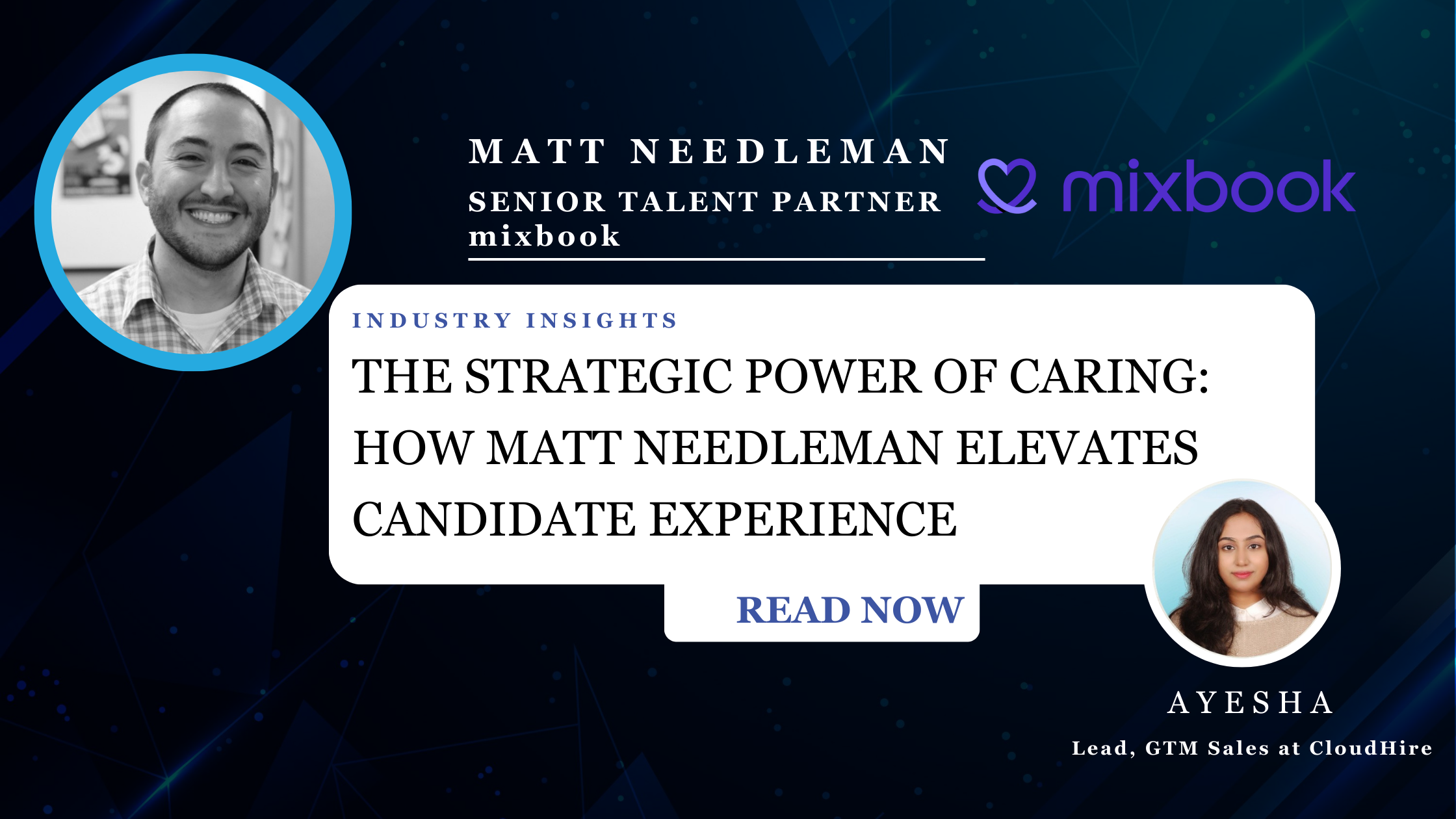
An exclusive Remote Scaling interview with Matt Needleman, Senior Talent Partner at Mixbook, exploring how a recruiter with over a decade of experience built one of the most high-touch, human-centered candidate journeys in modern hiring. From managing non-technical pipelines to shaping how a fully remote company communicates, Matt’s philosophy blends discipline, empathy, and a strong belief that what candidates feel during the process defines how they talk about a company long after.
Before you hear anything about systems or tools, Matt Needleman says something that immediately grabs your attention: “Small efforts go a long way.”
Most companies talk about candidate experience. Very few operationalize it with this level of intention.
This is the story of how he does it.
A Recruiter Who Starts the Clock the Moment You Apply
Matt has been recruiting since 2012, focusing mainly on non-engineering roles across marketing, product management, operations, and leadership. The landscape he operates in is extremely competitive. According to him, “It’s a company’s market right now, which means there are a lot of great candidates out there.”
With so much talent available, his job is not just to source or assess. It is to protect interviewers from fatigue while ensuring the right people get moved forward quickly.
But here is where his approach separates itself.
For Matt, employee experience begins before employees ever become employees. It begins the moment he reaches out.
“I start the clock on what the candidate experience is like the moment I get in touch with them. How long they wait in between touch points, how much information they receive, and what they learn. That matters.”
This single mindset creates clarity in his entire process.
The Secret Ingredient: Frequent, Honest, Human Touch Points
A lot of recruiters believe candidate experience is something you improve through automation, templates, or better ATS workflows. Matt does not disagree with tools. He simply believes they cannot replace something more essential.
“I think the big differentiator is actually giving the candidate as much information as you can. Telling them about the company, the opportunity, the people involved, and the full interview process. Even just doing that is already a cut above what most companies are doing.”
This transparency is paired with something more unusual in today’s hiring climate: regular no-update updates.
“Even if there is a delay, I still reach out to let them know. I give them a no-update update. Candidates really appreciate even a short email saying, I don’t have feedback yet, but I will soon.”
It sounds simple. It is simple. Yet very few do it.
Rejecting Candidates by Phone: A Lost Art That Changes Brand Perception
One of the most striking things Matt shared is his commitment to calling candidates who make it to hiring manager conversations, even when they are rejected.
“It leaves a very good impression, even if they do not get the job. A call puts you in the top ten percent of companies. Maybe even the top five. Most companies do not even send a rejection email. People get ghosted.”
This is not about being nice. It is about talent strategy.
People talk. People remember. People apply again.
“A candidate receives a call, and it is worth ten times more than an email. And that is true whether I am giving them next steps, a no-update update, or telling them we are not moving forward.”
For companies trying to build a reputation in competitive markets, this single practice is a multiplier.
The Most Powerful Tool in Recruiting: The Calendar
When asked how he does this consistently, Matt gives an answer that is refreshingly unglamorous.
“The most important technology I use is the calendar. I literally put time on the calendar to get back to candidates. A half-hour block to call them or email them.”
He laughs a little when he explains it, because this is not the AI-powered, automated, hyper-scalable solution people expect to hear about.
But it works.
“In our world of efficiency, people think they are too busy to get back to candidates. That attitude is destructive to a company’s brand.”
This philosophy aligns with something he repeats later: You cannot scale caring through technology. You scale it through culture.
Why Mixbook Runs a 6 to 7 Step Interview Process
Many companies are slashing their interview steps in the name of efficiency. Mixbook takes the opposite approach.
Their process ranges from five to seven stages, depending on the role. It is more rigorous than most companies, but Matt believes it gives the team confidence in their decisions.
“Hiring managers pick interviewers they trust. They want a second or third read before they make a decision. It gives higher confidence that we are making the right hire.”
Efficiency matters, but alignment matters just as much.
Can This Model Scale? Matt’s Answer Might Surprise You
Mixbook is a 130+ person company making about 25 to 35 hires a year.
At this size, even the CEO interviews finalists. The head of engineering still speaks with every engineer.
But Matt knows this will not last forever.
“It is sustainable now. Once we start hiring 50 or more people a year, we will need to slim down the process. Instead of two executive interviews, maybe one. Instead of four stakeholders, maybe two.”
He even calculates that leaders spend about a week per year interviewing.
One week to shape the entire future of the company. He says that is worth it.
On AI in Employee Experience: Cautious Curiosity
Some HR leaders are bullish on AI. Some are terrified. Matt is neither.
“I am curious, and I think it has a long way to go. I do not have a vision for how AI fits into our employee experience today.”
For Mixbook’s current hiring volume, he does not see the need.
“If I had to reach out to a hundred candidates a week, maybe I would use AI. But right now, using AI to manage communications feels like a bad idea.”
Human process, human experience. That is the theme.
The Culture Behind the Candidate Experience: Caring and Over-Communication
When asked why Mixbook’s process works, Matt does not attribute it to technology, frameworks, or methodologies.
He attributes it to a value: caring.
“Culture starts at the leadership level. One of our core values is caring. We have to care about ourselves, about each other, and about the customer. For me, the customer is the candidate.”
This shows up in texting candidates, calling them, keeping them informed, giving them context, and making them feel seen.
It also shows up internally.
“People appreciate knowing what is happening inside the company. Facts, figures, plans. Overcommunication always helps.”
This philosophy anchors the entire company. It also explains why Matt’s style works. It is not a tactic. It is a cultural expression.
Where Mixbook Goes from Here
Matt believes the company will evolve its hiring process as it grows, but he is optimistic that the core of the experience can remain.
As long as the cultural value of caring stays strong, the candidate experience will stay strong.
And that may be the lesson for every growing company: scale systems, not humanity.
At the very end of the conversation, Matt shared his curiosity about how larger companies scale hiring with high volumes. That curiosity is the same spark behind CloudHire’s research and community work, bringing together insights from leaders like Matt to help companies build better, more humane recruiting systems.
CloudHire is proud to spotlight leaders like Matt Needleman who are shaping the future thoughtfully and boldly.
Subscribe to the Scaling Remote newsletter for exclusive interviews, tactics, and insights on building high-performing distributed teams.